Skip to main content
Microbiology
Il mio corso
Impara
Preparazione agli esami
AI Tutor
Guide di studio
Soluzioni per libri di testo
Flashcard
Esplora
Prova l'app
Il mio corso
Impara
Preparazione agli esami
AI Tutor
Guide di studio
Soluzioni per libri di testo
Flashcard
Esplora
Prova l'app
Indietro
Microbiology Key Concepts
Puoi toccare per girare la carta.
Which scientist established criteria for determining the etiological agent of infectious disease?
Puoi toccare per girare la carta.
👆
Which scientist established criteria for determining the etiological agent of infectious disease?
Robert Koch established criteria known as Koch's postulates to identify the causative agent of infectious diseases.
Avanzamenti del tracciato
I pulsanti di controllo sono stati cambiati in modalità "navigazione".
1/16
Video consigliati
01:36
Koch's Postulates
3713
views
52
rank
03:31
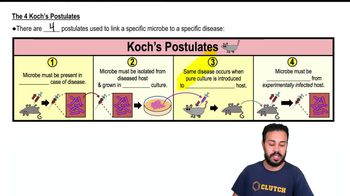
The 4 Koch's Postulates
3673
views
46
rank
02:58
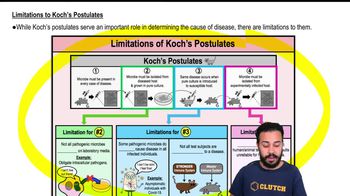
Limitations to Koch's Postulates
2618
views
28
rank
Termini in questo insieme (16)
Nascondere definizioni
Which scientist established criteria for determining the etiological agent of infectious disease?
Robert Koch established criteria known as Koch's postulates to identify the causative agent of infectious diseases.
What is aseptic technique and why is it central to healthcare?
Aseptic technique involves practices that prevent contamination by pathogens, crucial for reducing infections in healthcare settings.
What is a nosocomial infection?
A nosocomial infection is an infection acquired in a hospital or healthcare facility.
What is the scientific method and its steps?
The scientific method is a systematic process to answer questions: observation, hypothesis, experimentation, analysis, and conclusion.
What does a microbe's morphology describe?
Morphology describes the shape, size, and arrangement of microbial cells.
Name the three domains of life.
The three domains are Bacteria, Archaea, and Eukarya.
What is a strain in microbiology?
A strain is a genetic variant or subtype of a microbial species.
What is binomial nomenclature and who developed it?
Binomial nomenclature is the two-name system for naming species, developed by Carl Linnaeus.
Describe parasitism in symbiotic relationships.
Parasitism is a relationship where one organism benefits at the expense of the other.
Describe mutualism in symbiotic relationships.
Mutualism is a symbiotic relationship where both organisms benefit.
Describe commensalism in symbiotic relationships.
Commensalism is a relationship where one organism benefits and the other is neither helped nor harmed.
What is our normal microbiota?
Normal microbiota are the microorganisms that normally live on and in the human body without causing disease.
What type of symbiotic relationship do we have with our normal microbiota?
We have mostly mutualistic and commensal relationships with our normal microbiota.
What commonly causes disruptions in the normal microbiota?
Antibiotic use is a common cause of disruptions in the normal microbiota.
What is a biofilm? Give an example.
A biofilm is a community of microbes attached to a surface, such as dental plaque on teeth.
What is bioremediation?
Bioremediation is the use of microbes to clean up environmental pollutants.
 IndietroIndietro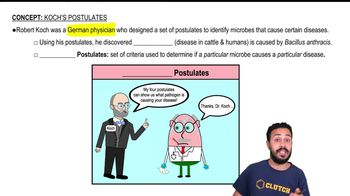
 01:36
01:36