 Indietro
Microbiology Module 1 Study Guide Flashcards
 03:56
03:56
Termini in questo insieme (37)
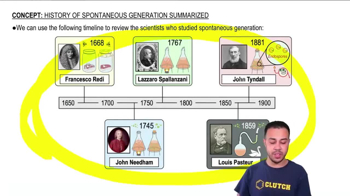
The idea that living organisms can arise from nonliving matter spontaneously without parent organisms.
Experiments by Louis Pasteur using swan-neck flasks showed that microorganisms come from other microorganisms, supporting biogenesis.
Disproved spontaneous generation, developed pasteurization, and contributed to germ theory of disease.
Developed Koch's postulates to link specific microbes to specific diseases and advanced pure culture techniques.
Introduced antiseptic surgical techniques to reduce infections using carbolic acid (phenol).
Advocated handwashing in medical settings to prevent puerperal fever and reduce infections.
First to describe cells in cork, coining the term 'cell' in biology.
First to observe and describe microorganisms using handcrafted microscopes.
Used statistical data to improve sanitary conditions in hospitals, reducing infections and mortality.
Growth, reproduction, metabolism, cellular organization, response to stimuli, and homeostasis.
Prokaryotic, unicellular, cell walls with peptidoglycan, reproduce by binary fission.
Eukaryotic, can be unicellular or multicellular, cell walls made of chitin, reproduce via spores.
A fungal infection affecting humans or animals.
Endospores are dormant, resistant structures for survival; fungal spores are reproductive units for dispersal.
They resist heat, chemicals, and disinfectants, making sterilization difficult.
Based on locomotion: flagella, cilia, pseudopodia, or non-motile forms.
Nematodes (roundworms) and platyhelminths (flatworms, including flukes and tapeworms).
Product of the ocular lens magnification and the objective lens magnification.
The ability to distinguish two close objects as separate entities.
Increases resolution by reducing light refraction between the slide and lens.
TEM shows internal structures by transmitting electrons; SEM shows surface details by scanning electrons.
Classifies bacteria as Gram-positive or Gram-negative based on cell wall properties.
Mycobacterium and Nocardia; they have waxy mycolic acid in their cell walls resisting decolorization.
The community of microorganisms living in or on a host organism, often beneficial or neutral.
A symbiotic relationship where one organism benefits and the other is harmed.
A symbiotic relationship where both organisms benefit.
A symbiotic relationship where one organism benefits and the other is unaffected.
A community of microorganisms attached to a surface, embedded in a protective matrix.
They protect microbes from antibiotics and immune responses, causing persistent infections.
Bioremediation, food and beverage production, drug manufacturing, and biofuel production.
Use of microbes to clean up environmental pollutants.
Dehydration synthesis builds molecules by removing water; hydrolysis breaks molecules by adding water.
Covalent bonds share electrons, ionic bonds transfer electrons, hydrogen bonds are weak attractions between polar molecules.
Carbohydrates (monosaccharides), lipids (glycerol and fatty acids), proteins (amino acids), nucleic acids (nucleotides).
Gloves, lab coat, eye protection, and closed-toe shoes.
Autoclave or use biohazard disposal methods to prevent contamination.
Multiply ocular lens magnification by objective lens magnification (e.g., 10x × 40x = 400x).