 Indietro
Introduction to Microbiology: The Microbial World, Cell Types, and Microscopy
Guida di studio - Note intelligenti
 Appunti personalizzati basati sui tuoi materiali, ampliati con definizioni chiave, esempi e contesto.
Introduction to Microbiology
Definition and Scope
Microbiology is the study of organisms too small to be seen clearly with the unaided eye. These include bacteria, archaea, fungi, protozoa, algae, and viruses. Microorganisms are ubiquitous and play essential roles in ecosystems, human health, and industry.
Microbiome (normal flora): The collection of microorganisms living in association with the human body, contributing to health and disease.
Ubiquity: Bacteria are found everywhere, with densities ranging from millions to billions per gram of soil or stool.
Rapid Growth: Bacteria can multiply rapidly under optimal conditions, leading to massive populations in short periods.
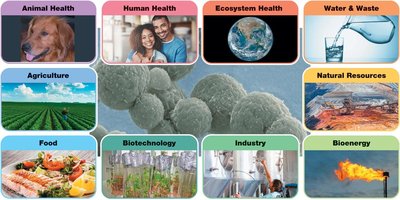
The Microbial World and Biodiversity
Microbial Diversity
Microorganisms represent the vast majority of Earth's biodiversity. Most known prokaryotes have cell diameters in the range of 0.5–2 µm, and 99% of Earth's biodiversity is microbial, including eukaryotic microbes.
Prokaryotes: Bacteria and Archaea, lacking a nucleus and membrane-bound organelles.
Eukaryotes: Organisms with a true nucleus and membrane-bound organelles.
Viruses: Acellular entities that require host cells for replication.
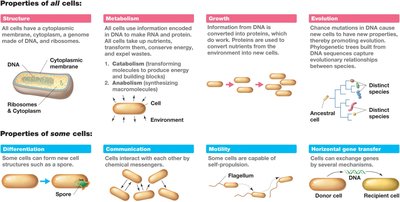
Properties of Cells
Universal Properties
All cells share certain fundamental properties, including structure, metabolism, growth, and evolution. Some cells also exhibit differentiation, communication, motility, and horizontal gene transfer.
Structure: All cells have a cytoplasmic membrane, cytoplasm, a genome made of DNA, and ribosomes.
Metabolism: Cells use information encoded in DNA to make proteins and carry out metabolic processes.
Growth: Cells grow by assimilating nutrients and dividing.
Evolution: Genetic changes allow adaptation and diversification.
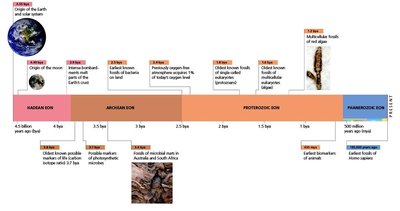
History of Life on Earth
Timeline of Major Events
The history of life on Earth spans billions of years, with microbial life dominating most of this history. Key events include the appearance of the Last Universal Common Ancestor (LUCA), the rise of multicellular eukaryotes, and the evolution of complex life forms.
LUCA: The most recent common ancestor of all current life forms.
Prokaryotes: First appeared over 3.5 billion years ago.
Eukaryotes: Emerged later, with multicellular forms appearing around 2.1 billion years ago.
Three Fundamental Kinds of Cells
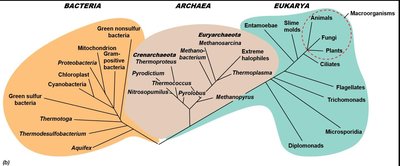
Bacteria
Bacteria are prokaryotic cells characterized by the absence of a nucleus, circular chromosomes, and unique molecular features such as peptidoglycan cell walls and ester-linked fatty acid membranes.
No nucleus (DNA in nucleoid)
Mostly circular chromosomes
No membrane-bound organelles
70S ribosomes
Asexual reproduction (binary fission)
Peptidoglycan cell wall
Archaea
Archaea are prokaryotes similar to bacteria but with distinct molecular characteristics, such as non-peptidoglycan cell walls and ether-linked isoprenoid membrane lipids. Many are extremophiles.
No nucleus (DNA in nucleoid)
Mostly circular chromosomes
No membrane-bound organelles
70S ribosomes
Asexual reproduction (binary fission)
Non-peptidoglycan cell wall
Ether-linked isoprenoid membrane lipids
Eukaryotes
Eukaryotes possess a true nucleus, linear chromosomes, and membrane-bound organelles. They can be unicellular or multicellular and reproduce both sexually and asexually.
Nucleated
Linear chromosomes
Membrane-bound organelles
80S ribosomes
Sexual and asexual reproduction
Large size (10+ µm)
Acellular Life Forms: Viruses
Viruses are acellular entities with DNA or RNA genomes, lacking cellular structure and independent metabolism. They require host cells for replication and can have complex reproductive cycles (lytic and lysogenic).
No nucleus or traditional chromosomes
DNA or RNA genomes (linear, circular, or segmented)
No ribosomes or cytoplasm
Reproductively complex (lytic/lysogenic cycles)
Very small (0.2 µm or less)
Endosymbiotic Theory
Origin of Mitochondria and Chloroplasts
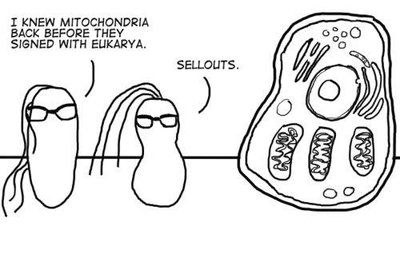
The endosymbiotic theory proposes that mitochondria and chloroplasts originated from free-living bacteria that were engulfed by ancestral eukaryotic cells. This symbiotic relationship led to the evolution of complex eukaryotic cells.
Mitochondria and chloroplasts have their own circular DNA, similar to bacteria.
They replicate independently within eukaryotic cells.
Both organelles have double membranes, supporting their prokaryotic origin.
Microbial Interactions and Symbiosis
Types of Symbiotic Relationships
Microorganisms engage in various interactions with each other and with hosts, including competition, commensalism, mutualism, and parasitism.
Commensalism: One organism benefits, the other is unaffected (e.g., spiders building webs on plants).
Mutualism: Both organisms benefit (e.g., gut bacteria aiding digestion).
Parasitism: One organism benefits at the expense of the other (e.g., infectious diseases).
The human microbiota is a complex ecosystem essential for health, with imbalances (dysbiosis) linked to diseases such as autoimmune disorders, obesity, and diabetes.
Microbial Roles in Ecosystems
Nutrient Cycling and Biosphere Homeostasis
Microbes are crucial for biogeochemical cycles, including the carbon, nitrogen, sulfur, phosphorus, and oxygen cycles. They fix carbon, decompose organic matter, and are the primary source of utilizable nitrogen for plants.
Microbial photosynthesis produces at least 50% of atmospheric oxygen.
Prokaryotic nitrogen fixation is essential for plant growth.
Microscopy in Microbiology
History and Importance
Microscopy is fundamental to microbiology, enabling the visualization of cells and microorganisms. Key historical figures include Hans and Zacharias Janssen (inventors of the microscope), Robert Hooke (discovered cells), and Antony van Leeuwenhoek (observed "animacules").
Compound Microscope: Uses two lenses to magnify specimens, resolving details as small as 0.2 μm.
Resolution: Determined by the wavelength of light and numerical aperture (NA) of the lens.
Resolution formula:
Numerical Aperture (NA):
Where n is the refractive index and α is half the angle of light incidence.
Types of Microscopy
Brightfield (unstained/stained): Light passes through the specimen; staining increases contrast.
Darkfield: Oblique light creates a bright image against a dark background.
DIC and Phase-contrast: Enhance contrast in unstained cells, creating a 3D effect.
Transmission Electron Microscopy (TEM): Provides high-resolution images of subcellular structures.
Scanning Electron Microscopy (SEM): Generates 3D images of specimen surfaces.
Evolution of the Tree of Life
Modern Phylogenetic Classification
The tree of life has evolved with advances in molecular biology, now recognizing three domains: Bacteria, Archaea, and Eukarya. Molecular data, such as ribosomal RNA sequences, have clarified evolutionary relationships.
Summary Table: Comparison of Cell Types
Feature | Bacteria | Archaea | Eukaryotes | Viruses |
|---|---|---|---|---|
Nucleus | No | No | Yes | No |
Chromosomes | Circular | Circular | Linear (many) | Linear/Circular/Segmented |
Membrane-bound Organelles | No | No | Yes | No |
Ribosomes | 70S | 70S | 80S | Host-derived |
Cell Wall | Peptidoglycan | Non-peptidoglycan | Varies | None |
Reproduction | Asexual (binary fission) | Asexual (binary fission) | Sexual/Asexual | Lytic/Lysogenic |
Size | 1–10 µm | 1–10 µm | 10+ µm | 0.2 µm or less |
Conclusion
Microbiology is a foundational biological science, exploring the diversity, structure, function, and ecological roles of microorganisms. Understanding the microbial world is essential for advances in health, industry, and environmental science.
