 Indietro
Microbiology: Immunity, Vaccines, and Disease Transmission
Guida di studio - Note intelligenti
 Appunti personalizzati basati sui tuoi materiali, ampliati con definizioni chiave, esempi e contesto.
Principles of Immunity
Innate and Adaptive Immune Responses
The immune system protects the body from infectious agents through two main branches: innate and adaptive immunity. Innate immunity provides the first line of defense and responds rapidly to pathogens, while adaptive immunity develops more slowly and provides long-lasting, specific protection.
Innate Immunity: Non-specific defense mechanisms that include physical barriers (skin, mucous membranes), phagocytic cells, and the production of inflammatory mediators.
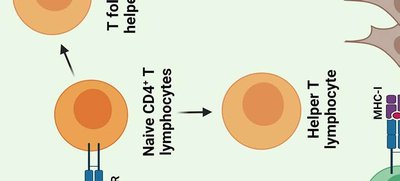
Adaptive Immunity: Specific defense mechanisms involving lymphocytes (B cells and T cells) that recognize and remember specific pathogens for more effective responses upon re-exposure.
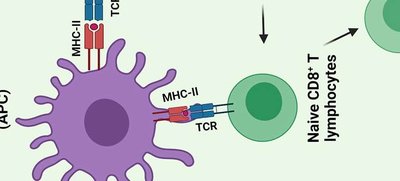
Antigen Presentation: Dendritic cells and macrophages present pathogen-derived antigens to T cells, initiating the adaptive immune response.
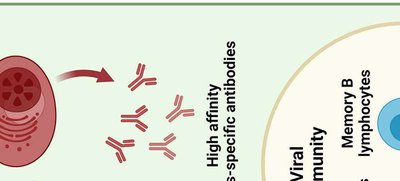
Antibodies: Produced by B cells, antibodies bind to specific antigens, neutralizing pathogens or marking them for destruction.
Memory Cells: Some B and T cells become memory cells, providing long-term immunity by responding rapidly to future infections by the same pathogen.

Vaccines and Immunization
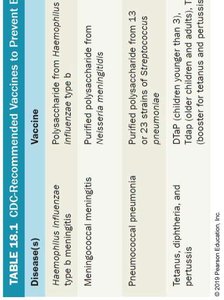
CDC-Recommended Vaccines to Prevent Bacterial Diseases
Vaccines are biological preparations that provide acquired immunity to specific infectious diseases. They are a cornerstone of public health, preventing the spread of bacterial and viral diseases. The CDC recommends several vaccines to protect against common bacterial pathogens.
Disease(s) | Vaccine | Recommendation | Booster |
|---|---|---|---|
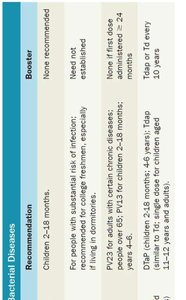
Haemophilus influenzae type b meningitis | Polysaccharide from Haemophilus influenzae type b | Children 2–18 months | None recommended |
Meningococcal meningitis | Purified polysaccharide from Neisseria meningitidis | For people with substantial risk of infection; recommended for college freshmen, especially if living in dormitories | Need not established |
Pneumococcal pneumonia | Purified polysaccharide from 13 or 23 strains of Streptococcus pneumoniae | For adults with certain chronic diseases; people over 65; P13 for children 2–18 months, years 4–6 | None if first dose administered ≥24 months |
Tetanus, diphtheria, and pertussis | DtaP (children 2–18 months; 4–6 years); Tdap (older children and adults; Tdap booster for tetanus and pertussis) | DtaP (children 2–18 months; 4–6 years); Tdap (similar to Tdap; single dose for children aged 11–12 years and adults) | Tdap or Td every 10 years |

CDC-Recommended Vaccines to Prevent Viral Diseases
Vaccines are also essential for preventing viral diseases. The CDC provides recommendations for immunization against several viral pathogens, including those causing childhood diseases and seasonal influenza.
Disease | Vaccine | Recommendation | Booster |
|---|---|---|---|
Chickenpox | Attenuated virus | For infants aged 12 months | Adults if exposed during outbreak |
Hepatitis A | Inactivated virus | Children at age 1 year; live in or travel to endemic areas; receive blood-clotting factors | Adults if exposed during outbreak |
Hepatitis B | Antigenic fragments of virus | For infants and children; for adults at risk, including health care workers, homosexual men, IV drug users, heterosexual people with multiple partners, and household contacts of hepatitis B carriers | (Duration of immunity not known) |
Herpes zoster | Attenuated virus | Adults over age 60 | Every 2 years |
Human papillomavirus | Antigenic fragments of virus | Boys and girls ages 11–12 | None recommended |
Influenza | Inactivated or attenuated virus | Everyone over 6 months of age, annually | Annual |

Principles of Disease Transmission
Transmission Pathways
Understanding how infectious diseases are transmitted is crucial for controlling outbreaks. Transmission can occur through direct contact, indirect contact, droplets, vectors, or contaminated food and water.
Direct Transmission: Involves physical contact between an infected individual and a susceptible host (e.g., touching, kissing).
Indirect Transmission: Involves contact with contaminated surfaces or objects (fomites).
Vector-Borne Transmission: Involves transmission by insects or animals (e.g., mosquitoes, ticks).
Foodborne and Waterborne Transmission: Involves ingestion of contaminated food or water.
Additional Context: Microbiology and Public Health
Role of Microbiology in Disease Prevention
Microbiology is the study of microorganisms, including bacteria, viruses, fungi, and protozoa. It plays a vital role in understanding infectious diseases, developing vaccines, and implementing public health measures to prevent disease spread.
Vaccine Development: Relies on understanding the structure and function of pathogens.
Herd Immunity: Achieved when a significant portion of the population is immune, reducing disease transmission.
Surveillance: Monitoring disease incidence to detect and respond to outbreaks.
Additional info: The images of bacteria and immune response diagrams reinforce the importance of microbiology in understanding and preventing infectious diseases.
