Ch. 10 - Host Microbe Interactions and Pathogenesis
Norman-McKay- Microbiology: Basic and Clinical Principles 2nd Edition
Norman-McKay2nd EditionMicrobiology: Basic and Clinical PrinciplesISBN: 9780137661619Non è quello che usi tu?Cambia libro di testo
Capitolo 6, Problema 10

A pathogen that makes endotoxin, enters through the fecal–oral route, and lacks a nucleus is most likely a
a. Virus.
b. Gram-positive bacterium.
c. Gram-negative bacterium.
d. Protozoan pathogen.
e. There is not enough information to answer this question.

Guida verificata passo dopo passo
1
Step 1: Identify the key characteristics given in the problem: the pathogen produces endotoxin, enters through the fecal–oral route, and lacks a nucleus.
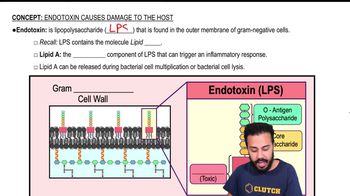
Step 2: Recall that endotoxins are components of the outer membrane of Gram-negative bacteria, specifically lipopolysaccharides (LPS), which are not produced by viruses, Gram-positive bacteria, or protozoa.
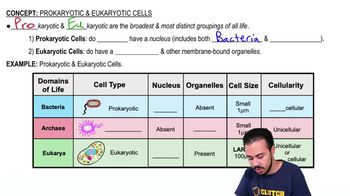
Step 3: Understand that organisms lacking a nucleus are prokaryotes, which include bacteria, while viruses and protozoa do not fit this description (viruses are acellular, protozoa are eukaryotic with nuclei).
Step 4: Combine these facts: since the pathogen produces endotoxin (a feature of Gram-negative bacteria) and lacks a nucleus (prokaryotic), it is most consistent with being a Gram-negative bacterium.
Step 5: Therefore, the best answer choice corresponds to the Gram-negative bacterium option.

Risposta video verificata per un problema simile:

Questa soluzione video è stata consigliata dai nostri tutor come utile per risolvere questo problema.
Durata del video:
1m

Concetti chiave

Ecco i concetti essenziali che devi comprendere per rispondere correttamente alla domanda.

Endotoxins and Their Source

Endotoxins are toxic components found in the outer membrane of Gram-negative bacteria, specifically lipopolysaccharides (LPS). They are released when the bacterial cell wall breaks down, causing strong immune responses. Understanding endotoxins helps identify the type of pathogen involved.
Video consigliato:
02:46
Endotoxin

Fecal–Oral Route of Transmission

The fecal–oral route is a common transmission pathway where pathogens in fecal matter contaminate food or water and enter a new host through ingestion. Many gastrointestinal pathogens, including certain bacteria, viruses, and protozoa, spread this way, influencing infection control and diagnosis.
Video consigliato:
04:23
Transmission Electron Microscope (TEM)

Prokaryotic vs. Eukaryotic Cell Structure

Prokaryotes, such as bacteria, lack a nucleus, while eukaryotes, like protozoa, have a defined nucleus. Identifying whether a pathogen has a nucleus helps distinguish between bacterial and protozoan infections, which is critical for accurate classification and treatment.
Video consigliato:
05:54
Prokaryotic & Eukaryotic Cells