Ch. 10 - Host Microbe Interactions and Pathogenesis
Norman-McKay- Microbiology: Basic and Clinical Principles 2nd Edition
Norman-McKay2nd EditionMicrobiology: Basic and Clinical PrinciplesISBN: 9780137661619Non è quello che usi tu?Cambia libro di testo
Capitolo 6, Problema 14

What three main options can a pathogen pursue following adhesion?

Guida verificata passo dopo passo
1
Understand that adhesion is the initial step where a pathogen attaches to host cells, which is crucial for establishing infection.
Identify the three main strategies a pathogen can follow after adhesion: colonization, invasion, or evasion.
Colonization involves the pathogen multiplying and establishing itself on the host surface without necessarily entering host cells.
Invasion refers to the pathogen penetrating host tissues or cells to spread deeper into the host.
Evasion means the pathogen avoids the host immune response to survive and persist within the host.

Risposta video verificata per un problema simile:

Questa soluzione video è stata consigliata dai nostri tutor come utile per risolvere questo problema.
Durata del video:
3m

Concetti chiave

Ecco i concetti essenziali che devi comprendere per rispondere correttamente alla domanda.

Adhesion in Pathogenesis

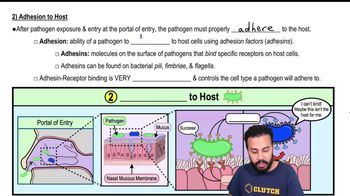
Adhesion is the initial step where a pathogen attaches to host cells using specific molecules called adhesins. This process is crucial for colonization and establishing infection, as it allows the pathogen to resist physical removal mechanisms like flushing by fluids.
Video consigliato:
03:59
2) Adhesion to Host

Invasion of Host Tissues

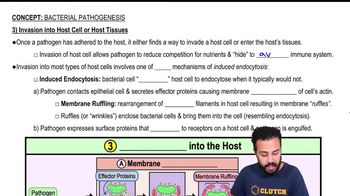
After adhesion, some pathogens invade host tissues by penetrating cellular barriers. This allows them to access nutrients, evade immune responses, and spread within the host, often leading to more severe infections.
Video consigliato:
05:38
3) Invasion into Host Tissues

Evasion of Host Immune Responses

Following adhesion, pathogens may employ strategies to avoid detection or destruction by the host immune system. These include producing capsules, secreting enzymes, or altering surface antigens to persist and multiply within the host.
Video consigliato:
02:57
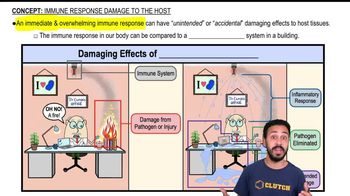
Intro to Immune Response Damage