Ch. 15 - Antimicrobial Drugs
Norman-McKay- Microbiology: Basic and Clinical Principles 2nd Edition
Norman-McKay2nd EditionMicrobiology: Basic and Clinical PrinciplesISBN: 9780137661619Non è quello che usi tu?Cambia libro di testo
Capitolo 11, Problema 5

Which drug family would be the most effective to treat a patient diagnosed with a MRSA infection?
a. Penicillins
b. Third-generation cephalosporins
c. Carbapenems
d. Lincosamides
e. Aminoglycosides

Guida verificata passo dopo passo
1
Step 1: Understand what MRSA stands for — Methicillin-Resistant Staphylococcus aureus — which means this bacterium is resistant to methicillin and other beta-lactam antibiotics like penicillins and many cephalosporins.
Step 2: Recognize that penicillins (option a) and third-generation cephalosporins (option b) belong to the beta-lactam family, which MRSA typically resists due to the mecA gene encoding an altered penicillin-binding protein.
Step 3: Note that carbapenems (option c) are also beta-lactam antibiotics and generally ineffective against MRSA because of the same resistance mechanism.
Step 4: Consider lincosamides (option d), such as clindamycin, which are often used to treat MRSA infections because they inhibit bacterial protein synthesis and MRSA strains can be susceptible to them.
Step 5: Aminoglycosides (option e) are sometimes used in combination therapy but are not typically the first choice for MRSA due to variable susceptibility and potential toxicity; thus, lincosamides are generally more effective for MRSA treatment.

Risposta video verificata per un problema simile:

Questa soluzione video è stata consigliata dai nostri tutor come utile per risolvere questo problema.
Durata del video:
3m

Concetti chiave

Ecco i concetti essenziali che devi comprendere per rispondere correttamente alla domanda.

Methicillin-Resistant Staphylococcus aureus (MRSA)

MRSA is a strain of Staphylococcus aureus bacteria that has developed resistance to methicillin and other beta-lactam antibiotics, making it difficult to treat with common drugs like penicillins and cephalosporins. Understanding MRSA's resistance mechanisms is crucial for selecting effective antibiotics.
Video consigliato:
03:14
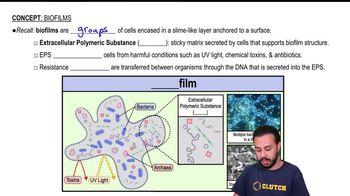
Biofilms

Beta-lactam Antibiotics and Resistance

Beta-lactam antibiotics, including penicillins, cephalosporins, and carbapenems, target bacterial cell wall synthesis. MRSA produces altered penicillin-binding proteins that reduce the efficacy of most beta-lactams, rendering many of these drugs ineffective against MRSA infections.
Video consigliato:
06:20
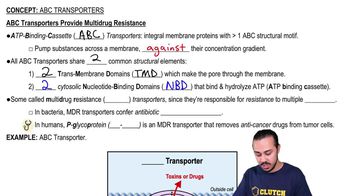
ABC Transporters Provide Multidrug Resistance

Alternative Antibiotic Classes Effective Against MRSA

Non-beta-lactam antibiotics such as lincosamides (e.g., clindamycin) and others are often used to treat MRSA infections. These drugs work through different mechanisms, like inhibiting protein synthesis, and can be effective when beta-lactams fail due to resistance.
Video consigliato:
03:48
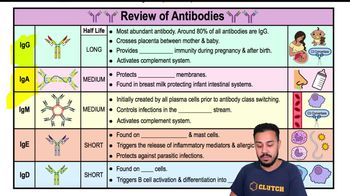
Review Table of Immunoglobin Classes
Pratica correlata
Domanda del libro di testo

A patient has an uncomplicated infection with a Gram-negative bacterium. He also has a history of penicillin allergy. Which drug is the best treatment option for this patient?

a. Ampicillin

b. A first-generation cephalosporin

c. A carbapenem

d. Isoniazid

e. Azithromycin

691
views
Domanda del libro di testo

A patient who is not a healthcare worker is diagnosed with C. difficile pseudomembranous colitis. What most likely led to this infection?

a. The patient was recently treated with a bacteriostatic drug.

b. The patient was recently treated with a broad-spectrum drug.

c. The patient was treated with a bactericidal drug.

d. The patient recently became immune compromised and therefore had an increased risk for infection.

e. The patient was recently exposed to someone with an active C. difficile infection.

718
views
Domanda del libro di testo

Choose the true statement(s) about therapeutic index (TI). Select all that apply.

a. A drug with a high therapeutic index would be effective above the dose at which it is potentially toxic.

b. A narrow TI is preferable.

c. A drug for which the maximum safe dose is close to the minimum effective dose would have a high TI.

d. It is one measure of a drug’s general safety.

e. A drug that is not selectively toxic would most likely have a high TI.

955
views
Domanda del libro di testo

The difference between a synthetic drug and a semisynthetic drug is that

a. the semisynthetic drug is a modified synthetic drug.

b. the synthetic drug is a modified natural drug.

c. the synthetic drug is a modified semisynthetic drug.

d. the semisynthetic drug is a modified natural drug.

187
views
Domanda del libro di testo

Match the antimicrobial drug class to its action. You may assign more than one drug class to a given action and some actions may not be applicable.

764
views
Domanda del libro di testo

What advantages might a semisynthetic antimicrobial drug have over an antibiotic?

880
views