
Ch. 17 - Skin and Eye Infections
Norman-McKay- Microbiology: Basic and Clinical Principles 2nd Edition
Norman-McKay2nd EditionMicrobiology: Basic and Clinical PrinciplesISBN: 9780137661619Non è quello che usi tu?Cambia libro di testo
Capitolo 13, Problema 18

A child comes into your clinic with impetigo. The lab cultures a sample for further analysis. If the sample is S. aureus, which lab results would you expect?
a. Gram-positive cocci in clusters, catalase and coagulase positive
b. Gram-negative diplococci, catalase positive, and coagulase negative
c. Gram-positive cocci in clusters, catalase negative, and coagulase positive
d. Gram-positive cocci in chains, catalase positive, and coagulase negative
e. Gram-positive cocci in chains, catalase negative, and coagulase positive

Guida verificata passo dopo passo
1
Step 1: Identify the morphology of Staphylococcus aureus under the microscope. S. aureus is known to be Gram-positive cocci that typically appear in clusters, resembling grape-like bunches.
Step 2: Determine the catalase test result. Staphylococcus species, including S. aureus, produce the enzyme catalase, so the catalase test will be positive.
Step 3: Determine the coagulase test result. S. aureus is coagulase positive, which helps differentiate it from other Staphylococcus species like S. epidermidis, which are coagulase negative.
Step 4: Compare the lab results given in the options with the known characteristics of S. aureus: Gram-positive cocci in clusters, catalase positive, and coagulase positive.
Step 5: Select the option that matches these characteristics exactly, which will confirm the expected lab results for S. aureus isolated from an impetigo lesion.

Risposta video verificata per un problema simile:

Questa soluzione video è stata consigliata dai nostri tutor come utile per risolvere questo problema.
Durata del video:
3m

Concetti chiave

Ecco i concetti essenziali che devi comprendere per rispondere correttamente alla domanda.

Gram Staining and Morphology of Staphylococcus aureus

Staphylococcus aureus is a Gram-positive bacterium that appears as cocci arranged in clusters under the microscope. Gram staining differentiates bacteria by their cell wall structure, with S. aureus retaining the crystal violet stain, appearing purple. Recognizing its cluster formation helps distinguish it from streptococci, which form chains.
Video consigliato:
04:57
Gram Stain

Catalase Test

The catalase test detects the enzyme catalase, which breaks down hydrogen peroxide into water and oxygen. Staphylococci, including S. aureus, are catalase positive, producing bubbles when exposed to hydrogen peroxide. This test differentiates staphylococci (catalase positive) from streptococci (catalase negative).
Video consigliato:
06:59
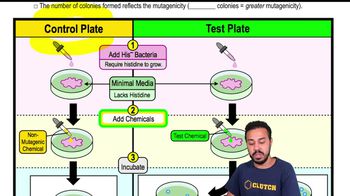
The Ames Test

Coagulase Test

The coagulase test identifies the ability of bacteria to clot plasma by producing the enzyme coagulase. Staphylococcus aureus is coagulase positive, which helps distinguish it from other staphylococci species like S. epidermidis that are coagulase negative. This test is crucial for confirming the presence of S. aureus in clinical samples.
Video consigliato:
06:59
The Ames Test
Pratica correlata
Domanda del libro di testo

Your patient is reminiscing about her childhood diseases while reviewing her medical history. She claims she had a really bad case of rubella (German measles) when she was a child and that she was very sick. You think she is confusing it with rubeola (measles) because:

a. measles can cause congenital rubella syndrome.

b. German measles causes a mild rash and is not likely to make a patient very sick.

c. the largest concern is for secondary infections like pneumonia.

d. she didn’t mention Koplik’s spots in the mouth or raised lesions.

e. the raised red rash usually begins on the trunk and spreads from there.

1173
views
Domanda del libro di testo

A frantic mother comes into your clinic because her two-year-old child has had a very high fever for two days now, with mild diarrhea and coldlike symptoms. As you consider the differential list, which is the most likely causative agent if the fever breaks and is replaced with a rash by tomorrow?

a. Human parvovirus B19

b. Hand, foot, and mouth disease

c. Roseola

d. Rubella

e. Measles

1169
views
Domanda del libro di testo

Your diabetic patient has a foot wound that has developed into serious necrosis and the recommended treatment has been sessions in the hyperbaric oxygen chamber. You are explaining to him what has contributed to this condition, including the causative agent, which is:

a. Bacillus anthracis.

b. Clostridium perfringens.

c. Corynebacteria diphtheriae.

d. Streptococcus pyogenes.

e. Pseudomonas aeroginosa.

1087
views
Domanda del libro di testo

Concept Mapping:

Using the following terms, create a concept map to organize and review microbial diseases of the eyes.


- Acanthamoeba

- Adenoviruses

- Aspergillus

- Candida

- Chlamydia trachomatis

- Flies, fomites, fingers

- Fusarium

- Haemophilus influenzae

- Herpes simplex 1 virus

- Keratitis

- Moraxella

- River blindness

- Scarring of eyelid

- Staphylococcus species

- Streptococcus species

- Turning of lashes and further scarring

1126
views
Domanda del libro di testo

A 65-year-old patient calls the nursing hotline to ask about some painful blisters arranged in a band on one side of his waist. After hearing about the lesions, you ask him if he had chickenpox as a child. This is because you feel you are hearing about a case of:

a. candidiasis.

b. measles.

c. herpes.

d. shingles.

e. rubella.

1187
views