
Ch. 18 - Nervous System Infections
Norman-McKay- Microbiology: Basic and Clinical Principles 2nd Edition
Norman-McKay2nd EditionMicrobiology: Basic and Clinical PrinciplesISBN: 9780137661619Non è quello che usi tu?Cambia libro di testo
Capitolo 14, Problema 11

An HIV/AIDS patient is presenting with flulike symptoms, headache, fever, and disorientation. The MOST important piece of information a nurse must obtain for the patient is his or her
a. travel history, in and outside the United States.
b. diet for the last 3 days.
c. exposure to lakes or streams.
d. exposure to bats.

Guida verificata passo dopo passo
1
Step 1: Identify the clinical context and symptoms presented by the patient: flulike symptoms, headache, fever, and disorientation in an HIV/AIDS patient. These symptoms suggest a possible opportunistic infection or neurological involvement.
Step 2: Consider the relevance of each option in relation to the patient's immunocompromised status. For example, travel history can indicate exposure to endemic infections, diet might relate to nutritional status but is less immediately critical, exposure to lakes or streams could suggest waterborne infections, and exposure to bats could indicate risk for certain zoonotic infections.
Step 3: Understand that in immunocompromised patients, infections acquired during travel can be significant because they may be exposed to pathogens not common in their home area. Therefore, travel history is often crucial to narrow down possible infectious agents.
Step 4: Evaluate the other options: diet is important but less urgent in acute infection; exposure to lakes or streams is relevant for some infections but less likely to cause neurological symptoms; exposure to bats is important for diseases like rabies but less common and less likely without a bite or direct contact.
Step 5: Conclude that the most important piece of information to obtain first is the patient's travel history, as it can guide diagnostic testing and treatment by identifying potential exposure to region-specific pathogens.

Risposta video verificata per un problema simile:

Questa soluzione video è stata consigliata dai nostri tutor come utile per risolvere questo problema.
Durata del video:
2m

Concetti chiave

Ecco i concetti essenziali che devi comprendere per rispondere correttamente alla domanda.

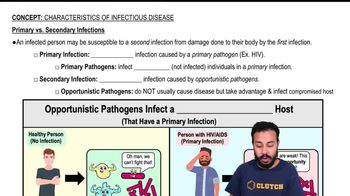
Immunocompromised Status in HIV/AIDS Patients

HIV/AIDS patients have weakened immune systems, making them susceptible to opportunistic infections. Understanding their immunocompromised state helps prioritize potential causes of symptoms like fever and disorientation, which may indicate serious infections.
Video consigliato:
04:16
Primary vs. Secondary Infections

Exposure to Bats and Zoonotic Infections

Bats are known reservoirs for several zoonotic pathogens, including viruses like rabies and histoplasmosis-causing fungi. In immunocompromised patients, exposure to bats can be critical information to diagnose infections that present with neurological and systemic symptoms.
Video consigliato:
03:27
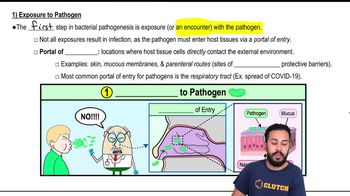
1) Exposure to Pathogen

Importance of Travel and Environmental Exposure History

Travel history and environmental exposures (such as lakes or streams) can reveal risks for infections like malaria or leptospirosis. However, in this case, specific exposure to bats is more directly linked to the symptoms in an HIV/AIDS patient.
Video consigliato:
01:25
Importance of Microorganisms