Ch. 19 - Digestive System Infections
Norman-McKay- Microbiology: Basic and Clinical Principles 2nd Edition
Norman-McKay2nd EditionMicrobiology: Basic and Clinical PrinciplesISBN: 9780137661619Non è quello che usi tu?Cambia libro di testo
Capitolo 15, Problema 4

How would an upper endoscopy help diagnose a Helicobacter pylori infection?

Guida verificata passo dopo passo
1
Understand that an upper endoscopy is a procedure where a flexible tube with a camera is inserted through the mouth to visualize the upper digestive tract, including the esophagus, stomach, and duodenum.
Recognize that during an upper endoscopy, the physician can directly observe the lining of the stomach and duodenum for signs of inflammation, ulcers, or other abnormalities that might suggest an infection with Helicobacter pylori.
Know that the endoscopy allows the physician to take biopsy samples (small tissue pieces) from the stomach lining, which is crucial for diagnosing H. pylori infection.
Learn that these biopsy samples can be subjected to various tests such as histological examination (microscopic analysis), rapid urease test, culture, or molecular methods to detect the presence of H. pylori bacteria.
Conclude that the combination of visual inspection and biopsy-based testing during an upper endoscopy provides a direct and reliable method to diagnose Helicobacter pylori infection.

Risposta video verificata per un problema simile:

Questa soluzione video è stata consigliata dai nostri tutor come utile per risolvere questo problema.
Durata del video:
2m

Concetti chiave

Ecco i concetti essenziali che devi comprendere per rispondere correttamente alla domanda.

Upper Endoscopy Procedure

An upper endoscopy is a diagnostic procedure where a flexible tube with a camera is inserted through the mouth to visualize the esophagus, stomach, and duodenum. It allows direct observation of mucosal abnormalities and enables biopsy collection for further analysis.
Video consigliato:
04:57
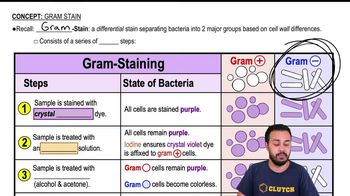
Gram Stain

Helicobacter pylori Infection

Helicobacter pylori is a bacterium that colonizes the stomach lining, causing inflammation, ulcers, and sometimes gastric cancer. Detecting its presence is crucial for diagnosis and treatment of related gastrointestinal diseases.
Video consigliato:
03:52
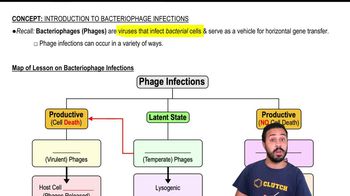
Map of Lesson on Bacteriophage Infections

Biopsy and Diagnostic Testing for H. pylori

During an upper endoscopy, tissue samples (biopsies) can be taken from the stomach lining to test for H. pylori using methods like histology, rapid urease test, or culture. These tests confirm infection by detecting the bacteria or its effects on gastric tissue.
Video consigliato:
06:59
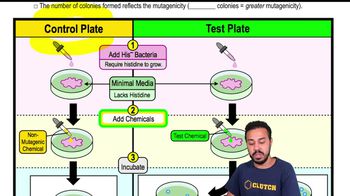
The Ames Test