Ch. 21 - Cardiovascular and Lymphatic Infections
Norman-McKay- Microbiology: Basic and Clinical Principles 2nd Edition
Norman-McKay2nd EditionMicrobiology: Basic and Clinical PrinciplesISBN: 9780137661619Non è quello che usi tu?Cambia libro di testo
Capitolo 17, Problema 11

What effect would AIDS have on latent coinfections?
a. None at all
b. Latent infections may become reactivated
c. Latent infections would turn into asymptomatic infections
d. Opportunistic pathogens could easily be reactivated
e. Latent infections would turn into opportunistic infections

Guida verificata passo dopo passo
1
Step 1: Understand the nature of AIDS and its impact on the immune system. AIDS (Acquired Immunodeficiency Syndrome) is caused by HIV, which targets and destroys CD4+ T cells, weakening the immune response.
Step 2: Define what latent coinfections are. Latent infections are those where the pathogen remains dormant within the host without causing active disease, often controlled by a healthy immune system.
Step 3: Consider how a weakened immune system due to AIDS affects latent infections. With fewer CD4+ T cells, the immune system cannot effectively suppress these latent pathogens.
Step 4: Recognize that reactivation of latent infections can occur when immune surveillance is compromised, leading to active disease or symptoms.
Step 5: Differentiate between latent infections becoming active and the role of opportunistic pathogens, which are normally controlled but can cause disease when immunity is low.

Risposta video verificata per un problema simile:

Questa soluzione video è stata consigliata dai nostri tutor come utile per risolvere questo problema.
Durata del video:
3m

Concetti chiave

Ecco i concetti essenziali che devi comprendere per rispondere correttamente alla domanda.

AIDS and Immune System Dysfunction

AIDS (Acquired Immunodeficiency Syndrome) results from HIV infection, which severely weakens the immune system by depleting CD4+ T cells. This immune suppression reduces the body's ability to control infections, making individuals vulnerable to reactivation of latent infections and new opportunistic infections.
Video consigliato:
03:27
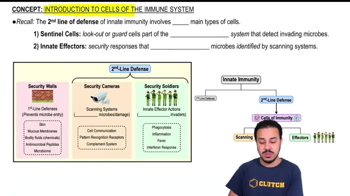
Introduction to Cells of the Immune System

Latent Infections

Latent infections occur when a pathogen remains dormant within the host without causing active disease. The immune system typically keeps these infections in check, preventing symptoms. However, if immune surveillance weakens, latent pathogens can reactivate and cause illness.
Video consigliato:
04:09
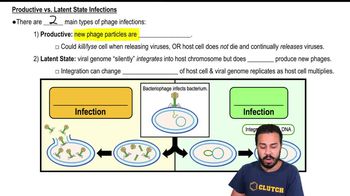
Productive vs. Latent State Infections

Opportunistic Infections in Immunocompromised Hosts

Opportunistic infections are caused by organisms that usually do not cause disease in healthy individuals but can cause severe illness when the immune system is compromised, such as in AIDS patients. Reactivation of latent infections often leads to opportunistic infections in these hosts.
Video consigliato:
03:52
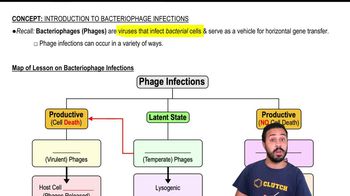
Map of Lesson on Bacteriophage Infections