Ch. 6 - Viruses and Prions
Norman-McKay- Microbiology: Basic and Clinical Principles 2nd Edition
Norman-McKay2nd EditionMicrobiology: Basic and Clinical PrinciplesISBN: 9780137661619Non è quello che usi tu?Cambia libro di testo
Capitolo 3, Problema 4

Compare and contrast production of viral proteins for dsDNA viruses and ssRNA+ viruses.

Guida verificata passo dopo passo
1
Step 1: Understand the genome type and replication site for each virus. Double-stranded DNA (dsDNA) viruses typically replicate in the host cell nucleus, while single-stranded positive-sense RNA (ssRNA+) viruses usually replicate in the cytoplasm.
Step 2: For dsDNA viruses, the viral DNA is transcribed by the host's RNA polymerase II into messenger RNA (mRNA), which is then translated into viral proteins by host ribosomes. This process closely resembles normal host gene expression.
Step 3: For ssRNA+ viruses, their genome acts directly as mRNA upon entry into the host cell. This means the viral RNA can be immediately translated by host ribosomes to produce viral proteins without the need for transcription.
Step 4: Consider the production of viral enzymes and structural proteins. dsDNA viruses often produce early proteins involved in DNA replication and late proteins for capsid formation, while ssRNA+ viruses translate their genome into a polyprotein that is later cleaved into functional proteins.
Step 5: Summarize the key differences: dsDNA viruses rely on host nuclear machinery for transcription and then translation, whereas ssRNA+ viruses bypass transcription by using their genome directly as mRNA in the cytoplasm, leading to differences in timing and regulation of viral protein production.

Risposta video verificata per un problema simile:

Questa soluzione video è stata consigliata dai nostri tutor come utile per risolvere questo problema.
Durata del video:
2m

Concetti chiave

Ecco i concetti essenziali che devi comprendere per rispondere correttamente alla domanda.

Genome Type and Replication Strategy

dsDNA viruses have double-stranded DNA genomes that typically replicate in the host nucleus using host or viral DNA-dependent DNA polymerases. In contrast, ssRNA+ viruses have single-stranded positive-sense RNA genomes that can directly serve as mRNA for protein synthesis and replicate in the cytoplasm using viral RNA-dependent RNA polymerases.
Video consigliato:
02:51
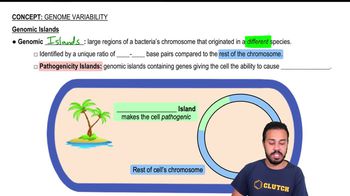
Genomic Islands

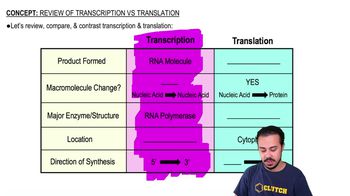
Transcription and Translation Mechanisms

dsDNA viruses transcribe their DNA into mRNA using host or viral RNA polymerase, producing mRNAs that are translated by host ribosomes. ssRNA+ viruses’ genomes act directly as mRNA, allowing immediate translation of viral proteins upon entry, bypassing the need for transcription.
Video consigliato:
04:07
Review of Transcription vs. Translation

Temporal Regulation of Viral Protein Production

dsDNA viruses often exhibit tightly regulated temporal expression of early and late proteins, coordinating replication and assembly. ssRNA+ viruses generally produce proteins continuously from their RNA genome, with some using subgenomic RNAs to regulate structural protein synthesis.
Video consigliato:
04:08
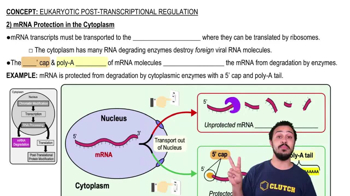
2) mRNA Protection in the Cytoplasm