Ch. 1 - The Microbial World and You
Tortora - Microbiology: An Introduction 14th Edition
Tortora14th EditionMicrobiology: An IntroductionISBN: 9780138200398Non è quello che usi tu?Cambia libro di testo
Capitolo 1, Problema 6

Which of the following is a beneficial activity of microorganisms?
a. Some microorganisms are used as food for humans.
b. Some microorganisms use carbon dioxide.
c. Some microorganisms provide nitrogen for plant growth.
d. Some microorganisms are used in sewage treatment processes.
e. all of the above

Guida verificata passo dopo passo
1
Step 1: Understand the role of microorganisms in various ecological and industrial processes. Microorganisms can have both beneficial and harmful effects, so identifying beneficial activities is key.
Step 2: Analyze option (a): Some microorganisms are used as food for humans. For example, certain algae and fungi are consumed directly or used in food production, which is a beneficial activity.
Step 3: Analyze option (b): Some microorganisms use carbon dioxide. This refers to photosynthetic microorganisms like cyanobacteria that fix carbon dioxide, contributing to the carbon cycle, which is beneficial.
Step 4: Analyze option (c): Some microorganisms provide nitrogen for plant growth. This involves nitrogen-fixing bacteria that convert atmospheric nitrogen into forms plants can use, a crucial beneficial process.
Step 5: Analyze option (d): Some microorganisms are used in sewage treatment processes. Microbes break down organic waste in sewage, helping to clean water, which is another beneficial activity. Since all these are beneficial, option (e) 'all of the above' is the comprehensive correct choice.

Risposta video verificata per un problema simile:

Questa soluzione video è stata consigliata dai nostri tutor come utile per risolvere questo problema.
Durata del video:
1m

Concetti chiave

Ecco i concetti essenziali che devi comprendere per rispondere correttamente alla domanda.

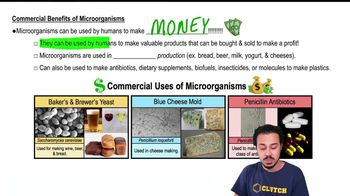
Microorganisms as a Food Source

Certain microorganisms, such as algae and fungi, serve as direct or indirect food sources for humans. For example, edible algae like spirulina are consumed as nutritional supplements, and yeast is used in baking and brewing, highlighting their beneficial role in human diets.
Video consigliato:
03:17
Commercial Benefits of Microorganisms

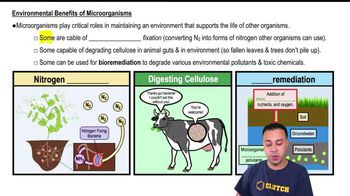
Microbial Role in Carbon and Nitrogen Cycles

Microorganisms play essential roles in global biogeochemical cycles by utilizing carbon dioxide during photosynthesis or other metabolic processes and fixing atmospheric nitrogen into forms usable by plants. This supports ecosystem productivity and plant growth.
Video consigliato:
04:19
Carbon

Microorganisms in Environmental Biotechnology

Microorganisms are employed in sewage treatment to break down organic waste and pollutants, helping to purify water and reduce environmental contamination. This beneficial activity demonstrates their importance in waste management and environmental sustainability.
Video consigliato:
04:27
Environmental Benefits of Microorganisms