
Ch. 13 - Viruses, Viroids, and Prions
Tortora - Microbiology: An Introduction 14th Edition
Tortora14th EditionMicrobiology: An IntroductionISBN: 9780138200398Non è quello che usi tu?Cambia libro di testo
Capitolo 9, Problema 6

Some antibiotics activate phage genes. MRSA releasing Panton-Valentine leukocidin is a toxin that can cause a life-threatening disease. Why can such a disease develop following antibiotic treatment?

Guida verificata passo dopo passo
1
Understand that some antibiotics can induce the SOS response in bacteria, which is a stress response to DNA damage.
Recognize that the SOS response can activate prophages (dormant phage genes integrated into the bacterial genome) to enter the lytic cycle, leading to phage gene expression.
Know that in MRSA (Methicillin-resistant Staphylococcus aureus), the genes encoding Panton-Valentine leukocidin (PVL) are often carried on prophages.
Realize that antibiotic treatment can trigger prophage activation, causing increased production and release of PVL toxin.
Conclude that this increased toxin release can lead to severe tissue damage and life-threatening disease following antibiotic treatment.

Risposta video verificata per un problema simile:

Questa soluzione video è stata consigliata dai nostri tutor come utile per risolvere questo problema.
Durata del video:
3m

Concetti chiave

Ecco i concetti essenziali che devi comprendere per rispondere correttamente alla domanda.

Phage Activation by Antibiotics

Certain antibiotics can induce the SOS response in bacteria, triggering the activation of prophages—viral DNA integrated into the bacterial genome. This activation leads to phage gene expression, sometimes resulting in the production and release of toxins encoded by these phages.
Video consigliato:
04:18
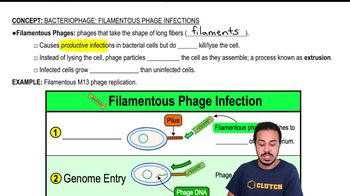
Bacteriophage: Filamentous Phage Infections

Panton-Valentine Leukocidin (PVL) Toxin

PVL is a cytotoxin produced by some strains of MRSA, encoded by genes often carried on bacteriophages. It targets and destroys white blood cells, leading to severe tissue damage and contributing to life-threatening infections such as necrotizing pneumonia.
Video consigliato:
03:40
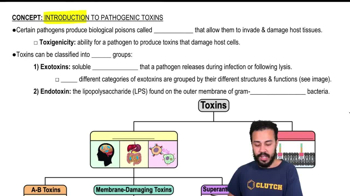
Introduction to Pathogenic Toxins

Impact of Antibiotic Treatment on MRSA Pathogenicity

Antibiotic treatment can unintentionally enhance MRSA virulence by inducing prophage activation, increasing PVL toxin production. This paradoxical effect can worsen disease severity despite bacterial killing, explaining why life-threatening conditions may develop after antibiotic use.
Video consigliato:
03:40
Introduction to Pathogenic Toxins