Ch. 16 - Innate Immunity: Nonspecific Defenses of the Host
Tortora - Microbiology: An Introduction 14th Edition
Tortora14th EditionMicrobiology: An IntroductionISBN: 9780138200398Non è quello che usi tu?Cambia libro di testo
Capitolo 12, Problema 8

Helicobacter pylori uses the enzyme urease to counteract a chemical defense in the human organ in which it lives. This chemical defense is
a. lysozyme.
b. hydrochloric acid.
c. superoxide radicals.
d. sebum.
e. complement.

Guida verificata passo dopo passo
1
Step 1: Understand the habitat of Helicobacter pylori, which is the human stomach, an environment known for its highly acidic conditions.
Step 2: Recognize that Helicobacter pylori produces the enzyme urease, which catalyzes the hydrolysis of urea into ammonia and carbon dioxide.
Step 3: Connect the production of ammonia by urease to its role in neutralizing the acidic environment, thereby protecting the bacteria from stomach acid.
Step 4: Identify the chemical defense in the stomach that urease helps to counteract, which is the acidic pH primarily due to hydrochloric acid.
Step 5: Review the answer choices and select the one that corresponds to the stomach's chemical defense neutralized by urease, which is hydrochloric acid.

Risposta video verificata per un problema simile:

Questa soluzione video è stata consigliata dai nostri tutor come utile per risolvere questo problema.
Durata del video:
1m

Concetti chiave

Ecco i concetti essenziali che devi comprendere per rispondere correttamente alla domanda.

Helicobacter pylori and its survival mechanism

Helicobacter pylori is a bacterium that colonizes the human stomach, an acidic environment hostile to most microbes. It produces the enzyme urease, which breaks down urea into ammonia and carbon dioxide, helping neutralize stomach acid and protect the bacterium from acidic damage.
Video consigliato:
04:18
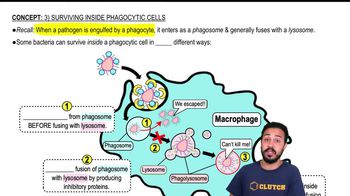
Surviving Inside Phagocytic Cells

Role of urease enzyme

Urease catalyzes the hydrolysis of urea into ammonia and carbon dioxide. The ammonia raises the local pH around H. pylori, neutralizing the stomach's hydrochloric acid and allowing the bacterium to survive and colonize the gastric mucosa.
Video consigliato:
02:55
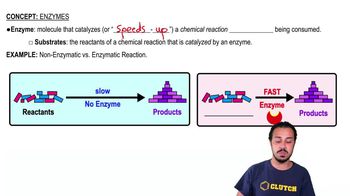
Enzymes

Chemical defenses of the stomach

The stomach defends against pathogens primarily through hydrochloric acid, which creates a highly acidic environment (pH ~1-2) that kills many microbes. Other defenses include enzymes and immune factors, but hydrochloric acid is the main chemical barrier targeted by H. pylori.
Video consigliato:
02:07
Chemical Defenses: Gastric Juice Prevents Microbial Growth by Lowering pH