Ch. 17 - Adaptive Immunity: Specific Defenses of the Host
Tortora - Microbiology: An Introduction 14th Edition
Tortora14th EditionMicrobiology: An IntroductionISBN: 9780138200398Non è quello che usi tu?Cambia libro di testo
Capitolo 13, Problema 10

How can a human make 100 billion different antibodies with only 25,000 different genes?

Guida verificata passo dopo passo
1
Step 1: Understand the key terms related to immunity. Active immunity involves the body producing its own antibodies, while passive immunity involves receiving antibodies from another source.
Step 2: Recognize that 'naturally acquired' immunity occurs through natural exposure to pathogens or antibodies (e.g., from mother to child), whereas 'artificially acquired' immunity results from medical interventions like vaccines or antibody injections.
Step 3: Identify that a diphtheria toxoid is an inactivated toxin used in vaccines to stimulate the immune system to produce antibodies without causing disease.
Step 4: Since the diphtheria toxoid is injected to stimulate the body's own immune response, this corresponds to an artificially acquired active immunity.
Step 5: Match the description to the correct choice: the injection of diphtheria toxoid corresponds to option d. Artificially acquired active immunity.

Risposta video verificata per un problema simile:

Questa soluzione video è stata consigliata dai nostri tutor come utile per risolvere questo problema.
Durata del video:
5m

Concetti chiave

Ecco i concetti essenziali che devi comprendere per rispondere correttamente alla domanda.

Active Immunity

Active immunity occurs when an individual's immune system is stimulated to produce antibodies and memory cells in response to exposure to an antigen, either naturally or artificially. This type of immunity is long-lasting because the body learns to recognize and fight the pathogen in future encounters.
Video consigliato:
02:37
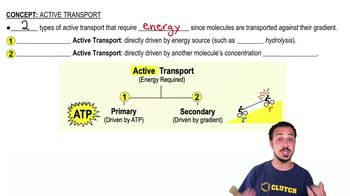
Active Transport

Artificially Acquired Immunity

Artificially acquired immunity results from deliberate exposure to an antigen through medical interventions such as vaccines or toxoids. It can be active, where the body produces its own antibodies, or passive, where antibodies are directly introduced. Vaccination with diphtheria toxoid is an example of artificially acquired active immunity.
Video consigliato:
03:19
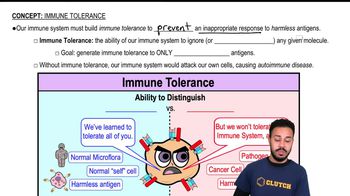
Immune Tolerance

Diphtheria Toxoid and Immunization

Diphtheria toxoid is an inactivated toxin used in vaccines to safely stimulate the immune system without causing disease. Injection of diphtheria toxoid triggers the body to produce antibodies against the toxin, providing protection through artificially acquired active immunity and preventing diphtheria infection.
Video consigliato:
03:19
Immune Tolerance