

Ch. 23 - Microbial Diseases of the Cardiovascular and Lymphatic Systems
Tortora - Microbiology: An Introduction 14th Edition
Tortora14th EditionMicrobiology: An IntroductionISBN: 9780138200398Non è quello che usi tu?Cambia libro di testo
Capitolo 19, Problema 2

Use the following choices to answer the question given below:
a. Ehrlichiosis
b. Lyme disease
c. Septic shock
d. Toxoplasmosis
e. Viral hemorrhagic fever
A patient was hospitalized because of continuing fever and progression of symptoms including headache, fatigue, and back pain. Tests for antibodies to B. burgdorferi were negative. What is your diagnosis?

Guida verificata passo dopo passo
1
Step 1: Identify the key symptoms presented by the patient: continuing fever, headache, fatigue, and back pain. These symptoms are common in several infectious diseases, so careful consideration is needed.
Step 2: Note that tests for antibodies to B. burgdorferi were negative. Since B. burgdorferi is the causative agent of Lyme disease, a negative antibody test suggests Lyme disease is unlikely.
Step 3: Review the list of possible diagnoses and their typical clinical features: a) ehrlichiosis often presents with fever, headache, fatigue, and muscle or back pain; b) Lyme disease is ruled out by the negative antibody test; c) septic shock involves severe systemic infection with hypotension and organ failure; d) toxoplasmosis usually involves flu-like symptoms or is asymptomatic; e) viral hemorrhagic fever includes bleeding and severe systemic symptoms.
Step 4: Based on the symptoms and negative Lyme disease test, consider ehrlichiosis as the most likely diagnosis because it matches the symptom profile and is caused by bacteria transmitted by ticks, similar to Lyme disease but distinct in diagnosis.
Step 5: Conclude that the diagnosis is ehrlichiosis, supported by the clinical presentation and exclusion of Lyme disease through antibody testing.

Risposta video verificata per un problema simile:

Questa soluzione video è stata consigliata dai nostri tutor come utile per risolvere questo problema.
Durata del video:
2m

Concetti chiave

Ecco i concetti essenziali che devi comprendere per rispondere correttamente alla domanda.

Borrelia burgdorferi and Lyme Disease

Borrelia burgdorferi is the bacterium that causes Lyme disease, typically transmitted by tick bites. Diagnosis often involves detecting antibodies against B. burgdorferi, but early testing can be negative. Understanding this helps differentiate Lyme disease from other illnesses with similar symptoms.
Video consigliato:
04:57
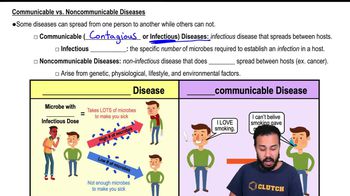
Communicable vs. Noncommunicable Diseases

Differential Diagnosis in Infectious Diseases

Differential diagnosis involves distinguishing a disease from others with overlapping symptoms by considering clinical presentation and test results. Negative antibody tests for B. burgdorferi suggest ruling out Lyme disease and considering other infections like ehrlichiosis or toxoplasmosis.
Video consigliato:
05:09
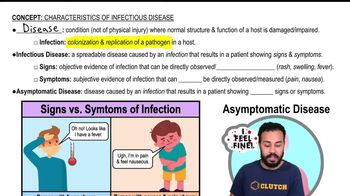
Intro to Characteristics of Infectious Disease

Ehrlichiosis and Its Clinical Features

Ehrlichiosis is a tick-borne bacterial infection causing fever, headache, fatigue, and muscle pain, similar to Lyme disease. It often lacks specific antibody tests early on, making clinical suspicion important. Recognizing its symptoms aids in accurate diagnosis when Lyme disease tests are negative.
Video consigliato:
03:54
Features of Bacterial Cells