Ch. 24 - Microbial Diseases of the Respiratory System
Tortora - Microbiology: An Introduction 14th Edition
Tortora14th EditionMicrobiology: An IntroductionISBN: 9780138200398Non è quello che usi tu?Cambia libro di testo
Capitolo 20, Problema 10

These aerobic, gram-negative bacteria produce tracheal cytotoxin that kills ciliated cells of the trachea.

Guida verificata passo dopo passo
1
Identify the key characteristics given in the problem: the bacteria are aerobic, gram-negative, and produce tracheal cytotoxin that damages ciliated cells of the trachea.
Recall that tracheal cytotoxin is a specific virulence factor known to be produced by certain bacteria that affect the respiratory tract, particularly targeting ciliated epithelial cells.
Consider common aerobic, gram-negative bacteria associated with respiratory infections and known for producing tracheal cytotoxin; this narrows down the possibilities.
Use your knowledge of microbiology to link the production of tracheal cytotoxin with the bacterium Bordetella pertussis, which is the causative agent of whooping cough and is known for this toxin.
Conclude that the bacterium described is Bordetella pertussis based on the combination of aerobic metabolism, gram-negative staining, and production of tracheal cytotoxin.

Risposta video verificata per un problema simile:

Questa soluzione video è stata consigliata dai nostri tutor come utile per risolvere questo problema.
Durata del video:
2m

Concetti chiave

Ecco i concetti essenziali che devi comprendere per rispondere correttamente alla domanda.

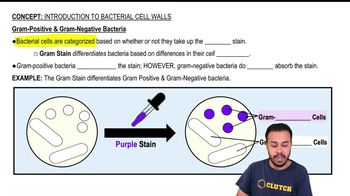
Aerobic Gram-negative Bacteria

These bacteria require oxygen for growth and have a cell wall structure characterized by a thin peptidoglycan layer and an outer membrane containing lipopolysaccharides. Their Gram-negative nature affects staining properties and antibiotic susceptibility, important for identification and treatment.
Video consigliato:
02:20
Gram-Positive & Gram-Negative Bacteria

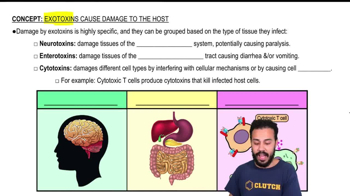
Tracheal Cytotoxin

Tracheal cytotoxin is a bacterial toxin that specifically damages ciliated epithelial cells in the respiratory tract. By killing these cells, it impairs mucociliary clearance, leading to respiratory symptoms and facilitating bacterial colonization.
Video consigliato:
03:30
Types of Exotoxins

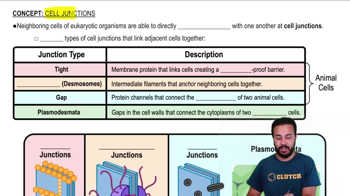
Ciliated Cells of the Trachea

Ciliated cells line the trachea and help move mucus and trapped particles out of the respiratory tract. Damage to these cells by toxins disrupts this defense mechanism, increasing vulnerability to infections and respiratory complications.
Video consigliato:
05:33
Cell Junctions
Pratica correlata
Domanda del libro di testo

Match the following choices to the statement in the question given below:

a. Bordetella pertussis

b. Corynebacterium diphtheriae

c. Legionella pneumophila

d. Mycobacterium tuberculosis

e. None of the above

Causes the formation of a membrane across the throat.

1167
views
Domanda del libro di testo

Match the following choices to the statement in the question given below:

a. Bordetella pertussis

b. Corynebacterium diphtheriae

c. Legionella pneumophila

d. Mycobacterium tuberculosis

e. None of the above

Resistant to destruction by phagocytes.

733
views
Domanda del libro di testo

Identify the bacteria involved in respiratory infections using the following laboratory test results:

Gram-positive cocci

Catalase-positive: a. ____________________________________

Catalase-negative

Beta-hemolytic, bacitracin inhibition: b. ____________________________________

Alpha-hemolytic, optochin inhibition: c. ____________________________________

Gram-positive rods

Non-acid-fast: d. ____________________________________

Acid-fast: e. ____________________________________

Gram-negative cocci: f. ____________________________________

Gram-negative rods

Aerobes

Coccobacilli: g. ____________________________________

Rods

Grow on nutrient agar: h. ____________________________________

Require special media: i. ____________________________________

Facultative anaerobes

Coccobacilli: j. ____________________________________

Intracellular parasites

Form elementary bodies: k. ____________________________________

Do not form elementary bodies: l. ____________________________________

Wall-less: m. ____________________________________

887
views
Domanda del libro di testo

Which of the following leads to all the rest?

a. Catarrhal stage

b. Cough

c. Loss of cilia

d. Mucus accumulation

e. Tracheal cytotoxin

1201
views