Ch. 25 - Microbial Diseases of the Digestive System
Tortora - Microbiology: An Introduction 14th Edition
Tortora14th EditionMicrobiology: An IntroductionISBN: 9780138200398Non è quello che usi tu?Cambia libro di testo
Capitolo 21, Problema 3

Isolation of E. coli from a stool sample is diagnostic proof that the patient has
a. Cholera.
b. E. coli gastroenteritis.
c. Salmonellosis.
d. Typhoid fever.
e. None of the above

Guida verificata passo dopo passo
1
Understand the nature of E. coli as a bacterium commonly found in the normal intestinal flora of humans and animals, meaning its presence in stool is usually normal and not necessarily indicative of disease.
Review the diseases listed in the options and identify which are caused by pathogens other than E. coli: Cholera is caused by Vibrio cholerae, Salmonellosis by Salmonella species, and Typhoid fever by Salmonella typhi.
Recognize that while some strains of E. coli can cause gastroenteritis, the mere isolation of E. coli from stool does not confirm E. coli gastroenteritis because non-pathogenic strains are also present in healthy individuals.
Conclude that isolation of E. coli from stool is not diagnostic proof of any of the diseases listed, as it can be part of normal flora, leading to the correct answer being 'None of the above'.
Summarize that diagnosis of E. coli gastroenteritis requires identification of specific pathogenic strains or toxins, not just the presence of E. coli in stool.

Risposta video verificata per un problema simile:

Questa soluzione video è stata consigliata dai nostri tutor come utile per risolvere questo problema.
Durata del video:
1m

Concetti chiave

Ecco i concetti essenziali che devi comprendere per rispondere correttamente alla domanda.

Normal Flora vs. Pathogenic Bacteria

Escherichia coli is a common member of the normal intestinal flora in humans. Its mere presence in stool samples does not necessarily indicate disease, as many strains are harmless. Distinguishing between normal flora and pathogenic strains is essential for accurate diagnosis.
Video consigliato:
03:40
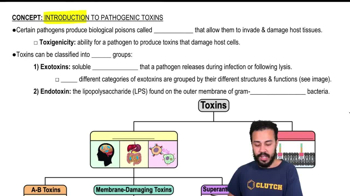
Introduction to Pathogenic Toxins

Pathogenicity of E. coli Strains

Certain strains of E. coli possess virulence factors that cause gastroenteritis and other diseases. Identifying specific pathogenic strains requires additional testing beyond isolation, such as detecting toxins or specific genes, to confirm if E. coli is the cause of illness.
Video consigliato:
04:12
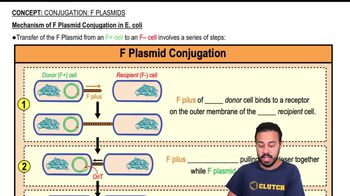
Mechanism of F Plasmid Conjugation in E. coli

Diagnostic Criteria for Infectious Diseases

Isolation of a microorganism from a clinical sample must be interpreted in context. For diseases like cholera, salmonellosis, or typhoid fever, the causative agents are different bacteria. Therefore, isolating E. coli alone does not provide diagnostic proof of these diseases.
Video consigliato:
05:09
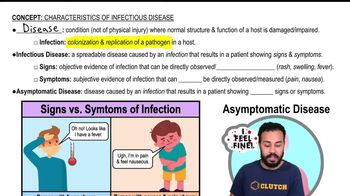
Intro to Characteristics of Infectious Disease