Ch. 26 - Microbial Diseases of the Urinary and Reproductive Systems
Tortora - Microbiology: An Introduction 14th Edition
Tortora14th EditionMicrobiology: An IntroductionISBN: 9780138200398Non è quello che usi tu?Cambia libro di testo
Capitolo 22, Problema 2

Use the following choices to answer questions 2–5:
a. Candida
b. Chlamydia
c. Gardnerella
d. Neisseria
e. Trichomonas
Microscopic examination of vaginal smear shows flagellated eukaryotes.

Guida verificata passo dopo passo
1
Step 1: Identify the key characteristic described in the problem, which is the presence of flagellated eukaryotes observed under microscopic examination of a vaginal smear.
Step 2: Recall that flagellated eukaryotes are organisms with flagella (whip-like structures) used for movement, and they belong to the domain Eukarya, meaning they have a true nucleus and organelles.
Step 3: Review the given options and classify them based on their cellular structure and motility: Candida (fungus, non-flagellated), Chlamydia (bacterium, non-flagellated), Gardnerella (bacterium, non-flagellated), Neisseria (bacterium, non-flagellated), and Trichomonas (flagellated protozoan).
Step 4: Understand that among the options, only Trichomonas is a flagellated eukaryote, specifically a protozoan parasite known to infect the urogenital tract and cause trichomoniasis.
Step 5: Conclude that the microscopic observation of flagellated eukaryotes in a vaginal smear corresponds to Trichomonas, based on its morphology and motility.

Risposta video verificata per un problema simile:

Questa soluzione video è stata consigliata dai nostri tutor come utile per risolvere questo problema.
Durata del video:
2m

Concetti chiave

Ecco i concetti essenziali che devi comprendere per rispondere correttamente alla domanda.

Flagellated Eukaryotes

Flagellated eukaryotes are organisms with a true nucleus and cellular organelles that move using whip-like structures called flagella. In microbiology, identifying flagella helps distinguish certain protozoa and some fungi from bacteria, which have different motility mechanisms. Recognizing flagellated eukaryotes is crucial for diagnosing infections caused by protozoan parasites.
Video consigliato:
05:51
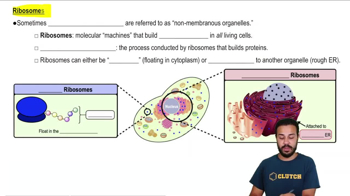
Eukaryotic Ribosomes

Trichomonas Vaginalis

Trichomonas vaginalis is a flagellated protozoan parasite that infects the human urogenital tract, causing trichomoniasis. It is characterized by its motility due to multiple flagella and is commonly identified in vaginal smears. Understanding its morphology and pathogenicity aids in differentiating it from other microorganisms in vaginal infections.

Microscopic Identification in Vaginal Smears

Microscopic examination of vaginal smears is a diagnostic tool to detect pathogens based on morphology and motility. Identifying features like flagella, cell shape, and staining properties helps differentiate organisms such as Candida (yeast), Gardnerella (bacteria), Neisseria (bacteria), Chlamydia (intracellular bacteria), and Trichomonas (protozoa). Accurate identification guides appropriate treatment.
Video consigliato:
03:46
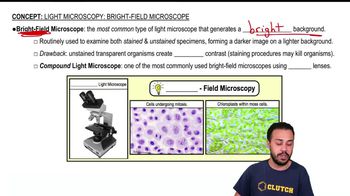
Light Microscopy: Bright-Field Microscopes