Ch. 28 - Applied and Industrial Microbiology
Tortora - Microbiology: An Introduction 14th Edition
Tortora14th EditionMicrobiology: An IntroductionISBN: 9780138200398Non è quello che usi tu?Cambia libro di testo
Capitolo 24, Problema 3

Use the following choices to answer the following question:
a. Bacillus coagulans
b. Byssochlamys
c. Flat sour spoilage
d. Lactobacillus
e. Thermophilic anaerobic spoilage


The spoilage of canned foods due to inadequate processing, accompanied by gas production.

Guida verificata passo dopo passo
1
Step 1: Understand the context of the problem, which involves identifying the type of spoilage in canned foods caused by inadequate processing and accompanied by gas production.
Step 2: Review the given options and recall their characteristics: Bacillus coagulans and Lactobacillus are bacteria; Byssochlamys is a heat-resistant mold; flat sour spoilage is a type of spoilage without gas production; thermophilic anaerobic spoilage involves gas production under anaerobic conditions.
Step 3: Recognize that spoilage with gas production in canned foods typically involves thermophilic anaerobic bacteria, which thrive in the anaerobic, high-temperature environment of canned foods.
Step 4: Eliminate options that do not fit the description: flat sour spoilage does not produce gas, and Byssochlamys is a mold, not a bacterium causing gas.
Step 5: Conclude that the correct type of spoilage described is thermophilic anaerobic spoilage, which is caused by bacteria like Bacillus coagulans that produce gas during spoilage due to inadequate processing.

Risposta video verificata per un problema simile:

Questa soluzione video è stata consigliata dai nostri tutor come utile per risolvere questo problema.
Durata del video:
1m

Concetti chiave

Ecco i concetti essenziali che devi comprendere per rispondere correttamente alla domanda.

Canned Food Spoilage

Canned food spoilage occurs when microorganisms survive inadequate heat processing, leading to food deterioration. Spoilage can manifest as off-odors, gas production, or texture changes, compromising safety and quality. Understanding spoilage types helps identify causes and prevention methods.
Video consigliato:
03:15
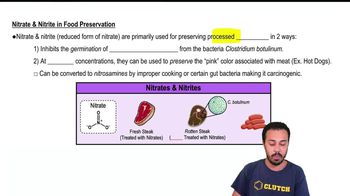
Nitrate & Nitrite in Food Preservation

Thermophilic Anaerobic Spoilage

Thermophilic anaerobic spoilage is caused by heat-loving bacteria that thrive in oxygen-free environments, such as improperly processed canned foods. These bacteria produce gas and cause swelling of cans without souring, indicating spoilage despite the absence of typical acidification.
Video consigliato:
03:35
Anaerobic Respiration

Gas Production in Food Spoilage

Gas production during spoilage results from microbial metabolism, often by anaerobic bacteria fermenting substrates. In canned foods, gas causes swelling or bulging, signaling spoilage and potential safety risks. Recognizing gas-producing spoilage helps in diagnosing and preventing contamination.
Video consigliato:
01:16
Chemical Preservation of Perishable Products