 Indietro
Microeconomics: Basic Economic Concepts and Circular Flow Model
 01:32
01:32
Termini in questo insieme (20)
Scarcity is the condition of wanting more than we can get with available resources, meaning people face limited resources and must make choices.
Opportunity cost is the value of the next-best alternative given up when making a choice.
Marginal decision making involves comparing additional benefits and additional costs of a choice, ignoring sunk costs.
Sunk costs are costs already paid that should not affect current or future decisions.
Incentives influence behavior by changing trade-offs; positive incentives encourage actions, negative incentives discourage them.
Collateral is a borrower's pledged asset (like a house or car) that a lender can take if the loan is not repaid.
Borrowers applied in groups; if one defaulted, the whole group lost borrowing privileges, creating social pressure to repay.
Efficiency means using resources in the most productive way to produce goods and services with the greatest total economic value.
Innovation, market failure, government intervention, and goals other than profit.
Microeconomics studies individual and firm resource management; macroeconomics studies the economy at regional, national, or international levels.
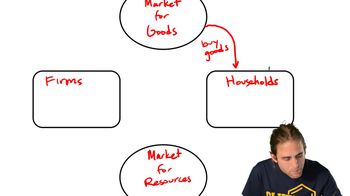
The market for goods and services and the market for factors of production.
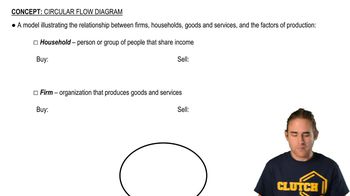
Households supply land, labor, and capital and buy goods; firms buy factors of production and produce goods and services.
Households spend money to buy goods and services; firms receive revenue and pay wages, rent, and profits to households.
Households provide factors of production to firms; firms produce goods and services sold back to households.
Correlation means two variables move together; causation means one variable causes the other.
Variables not included in analysis that affect both variables studied, potentially misleading conclusions about causation.
When it is unclear whether A causes B or B causes A, leading to potential misinterpretation of cause and effect.
A good model predicts cause and effect, makes clear assumptions, and describes the real world accurately enough to be useful.
Positive analysis describes how the world is; normative analysis prescribes how the world should be.
It helps explain and predict choices by assuming people weigh costs and benefits to achieve goals effectively.