 Indietro
Principles of Microeconomics - Foundations and Economic Way of Thinking
 01:42
01:42
Termini in questo insieme (23)
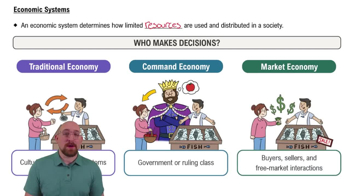
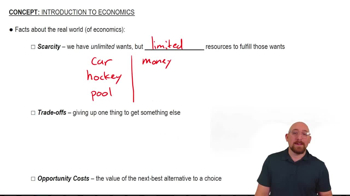
Economics studies how individuals and societies choose to use scarce resources, which are limited relative to wants.
Scarcity means resources are limited relative to what people want, forcing choices.
Microeconomics studies individual decision-making units and specific markets.
Economics changes how you see life by revealing scarcity, tradeoffs, incentives, and marginal decisions, helping understand society and support informed citizenship.
Opportunity cost is the value of the next best alternative forgone when making a choice.
It reveals hidden tradeoffs and shows that "free" resources are rare, helping compare alternatives properly.
Marginalism analyzes additional costs and benefits of one more unit of an activity to decide if it is worthwhile.
Take an action if marginal benefit > marginal cost; avoid it if marginal cost > marginal benefit.
Sunk costs are costs already incurred and unrecoverable; they should not affect current decisions.
Because they cannot be recovered, only future costs and benefits matter for current choices.
It explains how choices by individuals and firms shape work, trade, technology, and social outcomes.
Microeconomics studies individual units and markets; macroeconomics studies the economy as a whole.
"Why did coffee prices rise near campus?" focuses on a specific market and is microeconomic.
"Why is national inflation above target?" focuses on the aggregate economy and is macroeconomic.
A theory is a deliberate simplification used to explain how part of the world works.
Models simplify reality to highlight relevant forces and produce useful predictions.
Ceteris paribus means holding other things constant to isolate one relationship at a time.
It helps clarify cause and effect by focusing on one variable while holding others fixed.
Evaluating actions by considering benefits, costs, incentives, tradeoffs, and distributional effects.
Because they may weigh efficiency, fairness, risk, freedom, and distribution differently.
Confusing opportunity cost with the sum of all alternatives instead of the best forgone alternative.
Because decisions often depend on marginal cost, the cost of one more unit, not the average cost.
Sunk costs should not influence current decisions since they cannot be recovered.