Skip to main content
Nutrition
Il mio corso
Impara
Preparazione agli esami
AI Tutor
Guide di studio
Flashcard
Prova l'app
Il mio corso
Impara
Preparazione agli esami
AI Tutor
Guide di studio
Flashcard
Prova l'app
Indietro
Breastfeeding quiz
Puoi toccare per girare la carta.
What hormones are primarily responsible for the production and release of breast milk during lactation?
Puoi toccare per girare la carta.
👆
What hormones are primarily responsible for the production and release of breast milk during lactation?
Prolactin triggers milk production, while oxytocin triggers milk release (letdown response).
Avanzamenti del tracciato
I pulsanti di controllo sono stati cambiati in modalità "navigazione".
1/15
Flashcard correlate
Pratica correlata
Video consigliati
Breastfeeding definitions
Breastfeeding
15 Termini
Breastfeeding
14. Nutrition: Pregnancy Through Infancy
10 Problemi
Argomento
Nutritional Needs for Infants
14. Nutrition: Pregnancy Through Infancy
10 Problemi
Argomento
14. Nutrition: Pregnancy Through Infancy
5 Argomenti
15 Problemi
Capitolo
VideoThumbView.guidedCourse
02:18
Breastfeeding
89
views
2
rank
VideoThumbView.guidedCourse
01:28
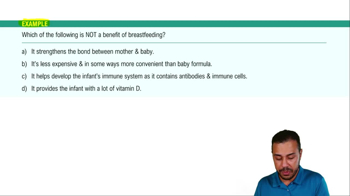
Breastfeeding Example 1
63
views
2
rank
VideoThumbView.guidedCourse
02:13
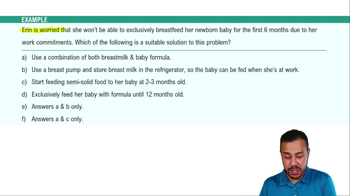
Breastfeeding Example 2
73
views
1
rank
Termini in questo insieme (15)
Nascondere definizioni
What hormones are primarily responsible for the production and release of breast milk during lactation?
Prolactin triggers milk production, while oxytocin triggers milk release (letdown response).
How does infant suckling influence breast milk production?
Suckling stimulates nerves that signal the hypothalamus, which then prompts the pituitary gland to release prolactin and oxytocin.
What is colostrum and when is it produced?
Colostrum is the first milk produced in the early days of breastfeeding, rich in antibodies and nutrients, and is thicker and yellow in color.
How does breast milk change during a single feeding session?
It transitions from foremilk, which is watery and low in fat, to hindmilk, which is thicker and higher in fat to satisfy the baby's hunger.
Why is breast milk considered nutritionally superior to infant formula?
Breast milk has better nutrient bioavailability and contains antibodies and immune cells not found in most infant formulas.
What are some maternal health benefits of breastfeeding?
Breastfeeding helps the uterus return to pre-pregnancy size, reduces birth-related bleeding, and lowers the risk of type 2 diabetes and some cancers.
How does breastfeeding support the infant’s immune system?
Breast milk provides antibodies and immune cells that protect the infant from diseases, infections, and allergies.
What is the recommended duration for exclusive breastfeeding?
Mothers are recommended to exclusively breastfeed their infants for the first six months of life.
How much should a breastfeeding mother increase her fluid intake compared to pregnancy?
Fluid intake should increase from 3 liters per day during pregnancy to about 3.8 liters per day while breastfeeding.
How do calorie needs change for mothers during breastfeeding compared to the third trimester of pregnancy?
Calorie needs decrease from 450 extra kilocalories per day in the third trimester to 330–400 extra kilocalories per day while breastfeeding.
What is the recommended carbohydrate intake for breastfeeding mothers?
Breastfeeding mothers should consume 210 grams of carbohydrates per day, up from 175 grams during pregnancy.
Why can breastfeeding mothers decrease their iron intake compared to pregnancy?
Iron needs decrease because menstruation is usually suppressed and breast milk contains little iron.
What dietary protein recommendation is given to breastfeeding mothers?
They should maintain a protein intake of about 1.1 grams per kilogram of body weight per day.
Why is proper maternal nutrition important during breastfeeding?
Proper nutrition ensures optimal milk production and supports healthy infant growth and development.
What substances should breastfeeding mothers avoid or limit?
They should avoid certain prescription and illegal drugs, smoking, alcohol, and limit caffeine intake.
 IndietroIndietro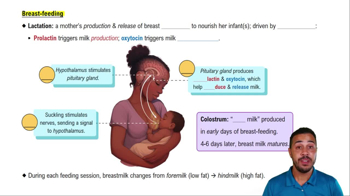
 02:18
02:18