Skip to main content
Nutrition
Il mio corso
Impara
Preparazione agli esami
AI Tutor
Guide di studio
Flashcard
Prova l'app
Il mio corso
Impara
Preparazione agli esami
AI Tutor
Guide di studio
Flashcard
Prova l'app
Indietro
Diabetes exam
Puoi toccare per girare la carta.
What is diabetes mellitus?
Puoi toccare per girare la carta.
👆
What is diabetes mellitus?
A chronic disease where the body does not produce enough insulin or cannot effectively use insulin, leading to hyperglycemia.
Avanzamenti del tracciato
I pulsanti di controllo sono stati cambiati in modalità "navigazione".
1/30
Flashcard correlate
Pratica correlata
Video consigliati
Diabetes definitions
Diabetes
15 Termini
Diabetes quiz
Diabetes
15 Termini
Diabetes
4. Carbohydrates
10 Problemi
Argomento
Blood Glucose Regulation
4. Carbohydrates
10 Problemi
Argomento
4. Carbohydrates
9 Argomenti
15 Problemi
Capitolo
VideoThumbView.guidedCourse
02:25
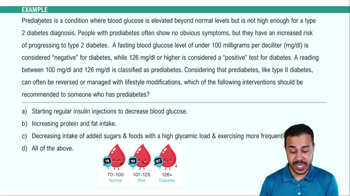
What is Type I Diabetes?
257
views
6
rank
VideoThumbView.guidedCourse
03:37
Diabetes Example 1
198
views
4
rank
VideoThumbView.guidedCourse
02:31
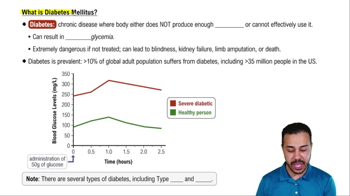
What is Diabetes Mellitus
295
views
3
rank
Termini in questo insieme (30)
Nascondere definizioni
What is diabetes mellitus?
A chronic disease where the body does not produce enough insulin or cannot effectively use insulin, leading to hyperglycemia.
Insulin
A hormone released by the pancreas that reduces blood glucose levels after eating.
Hyperglycemia
A condition characterized by blood glucose levels being too high.
What are the two main types of diabetes mellitus?
Type 1 diabetes and Type 2 diabetes.
Type 1 Diabetes
An autoimmune disorder where the immune system destroys insulin-producing beta cells in the pancreas.
What is the primary treatment for type 1 diabetes?
Lifelong insulin therapy via injection or pump.
Type 2 Diabetes
A disorder where body cells become insulin resistant, making insulin less effective.
What is insulin resistance?
A condition where body cells become less responsive to insulin.
Beta cells
Insulin-producing cells in the pancreas.
What percentage of diabetes cases are type 1?
About 5% of all diabetes mellitus cases.
What age group is most commonly diagnosed with type 1 diabetes?
Adolescents between ages 10 and 14.
What percentage of diabetes cases are type 2?
About 90-95% of all diabetes mellitus cases.
What is the most common age of diagnosis for type 2 diabetes?
After age 45, though younger diagnoses are increasing.
What is the main difference in insulin production between type 1 and type 2 diabetes?
Type 1: little to no insulin production; Type 2: insulin resistance initially, then possible low insulin production.
Can type 2 diabetes be reversed?
Yes, often through healthy diet and exercise, leading to remission.
What are some severe complications of untreated diabetes?
Blindness, kidney failure, limb amputation, or death.
Is type 1 diabetes an autoimmune disorder?
Yes, the immune system attacks beta cells in the pancreas.
How does the pancreas respond early in type 2 diabetes?
It produces excess insulin to compensate for insulin resistance.
What happens to the pancreas in late-stage type 2 diabetes?
It becomes overworked and produces less insulin.
What is diabetes remission?
When blood glucose levels return to normal without medication, often after lifestyle changes.
Is type 2 diabetes an autoimmune disorder?
No, it is characterized by insulin resistance, not immune attack.
What is the global prevalence of diabetes?
Over 10% of the global adult population.
What is the role of glucose transporters in diabetes?
They allow glucose to enter cells; in insulin resistance, they are not expressed, so glucose stays in the blood.
What is the only current treatment for type 1 diabetes?
Administration of insulin.
Why is hyperglycemia dangerous?
It can lead to severe health issues like organ damage and death.
How does a healthy person's blood glucose respond after eating?
Blood glucose levels remain relatively low due to effective insulin action.
What lifestyle factors increase risk for type 2 diabetes at a younger age?
Poor nutrition and lack of exercise.
Can type 2 diabetes be cured?
No, but it can often be managed or put into remission.
What is the main function of insulin?
To lower blood glucose levels after meals.
What happens if insulin is not effective or not produced?
Blood glucose remains high, leading to hyperglycemia.
 IndietroIndietro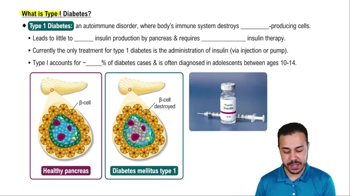
 02:25
02:25