Skip to main content
Nutrition
Il mio corso
Impara
Preparazione agli esami
AI Tutor
Guide di studio
Flashcard
Prova l'app
Il mio corso
Impara
Preparazione agli esami
AI Tutor
Guide di studio
Flashcard
Prova l'app
Indietro
Food Insecurity definitions
Puoi toccare per girare la carta.
Food Insecurity
Puoi toccare per girare la carta.
👆
Food Insecurity
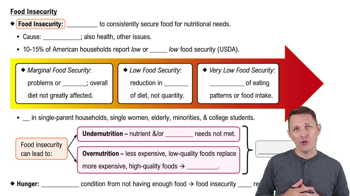
Inability to consistently obtain adequate food for nutritional needs, often linked to poverty and affecting millions in the U.S.
Avanzamenti del tracciato
I pulsanti di controllo sono stati cambiati in modalità "navigazione".
1/15
Flashcard correlate
Pratica correlata
Video consigliati
Food Insecurity quiz
Food Insecurity
15 Termini
Food Insecurity
13. Food Insecurity in the US and the World
10 Problemi
Argomento
Global Food Insecurity
13. Food Insecurity in the US and the World
10 Problemi
Argomento
13. Food Insecurity in the US and the World
2 Argomenti
15 Problemi
Capitolo
05:41
Food Assistance Programs in the U.S.
112
views
4
rank
05:36
Food Insecurity
152
views
3
rank
Termini in questo insieme (15)
Nascondere definizioni
Food Insecurity
Inability to consistently obtain adequate food for nutritional needs, often linked to poverty and affecting millions in the U.S.
Poverty
Primary driver of limited access to nutritious food, increasing risk for both undernutrition and overnutrition.
Malnutrition
Condition resulting from insufficient or excessive intake of nutrients, including both undernutrition and overnutrition.
Undernutrition
State where nutrient or calorie needs are not met, often due to lack of access to sufficient food.
Overnutrition
Excessive intake of low-quality foods, often leading to obesity, especially in low-income populations.
Marginal Food Security
Status marked by anxiety or problems obtaining food, but with little or no impact on overall diet quality or quantity.
Low Food Security
Condition where diet quality is reduced due to limited resources, but quantity of food intake is not significantly affected.
Very Low Food Security
Severe form where eating patterns are disrupted and food intake is reduced, often resulting in skipped meals.
Hunger
Physiological state resulting from insufficient food intake, sometimes but not always present in food insecurity.
SNAP
Federal program providing funds via EBT cards for low-income individuals to purchase approved foods at authorized retailers.
WIC
Supplemental nutrition program targeting low-income pregnant women, infants, and children up to age five.
Commodity Supplemental Food Program
USDA initiative supplying supplemental foods to low-income individuals aged 60 and older.
National School Lunch Program
Federal effort offering free or reduced-price meals to children from low-income families during school and summer.
Food Bank
Community organization distributing donated or purchased food to individuals and families in need.
Food Recovery Program
Initiative collecting surplus edible food from businesses to redistribute to those facing food insecurity.
 IndietroIndietro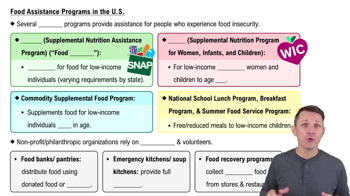
 05:41
05:41