 Indietro
Fundamentals of Nutrition
 04:00
04:00
Termini in questo insieme (22)
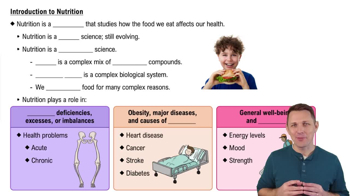
Nutrition is the science studying how nutrients and compounds in foods nourish the body and affect body functions and overall health.
Taste, culture, social life, nutrition knowledge, advertising, time, convenience, cost, habits, and emotions.
Carbohydrates, fats (lipids), proteins, vitamins, minerals, and water.
Carbohydrates, proteins, lipids, and vitamins contain carbon and are organic nutrients.
Essential nutrients must be consumed from food because the body cannot make enough to meet its needs.
Carbohydrates, lipids (fats), and proteins provide energy; alcohol also provides energy but is not a nutrient.
Carbohydrates = 4 kcal/g, Protein = 4 kcal/g, Fat = 9 kcal/g, Alcohol = 7 kcal/g.
The amount of energy required to raise the temperature of 1 kilogram of water by 1 degree Celsius; used to measure energy in foods.
Macronutrients are needed in large amounts (carbs, fats, proteins, water); micronutrients are needed in smaller amounts (vitamins, minerals).
Supply glucose, the primary energy source for many body cells including red blood cells and brain cells.
Provide energy, serve as structural components of cell membranes.
Provide amino acids for tissue synthesis, act as enzymes, neurotransmitters, and support immune function.
Water-soluble vitamins are not stored and need daily intake; fat-soluble vitamins are stored in the body.
Assist in body processes and are essential for structure of hard and soft tissues like bone and red blood cells.
It makes up most body fluids, aids metabolism, digestion, nutrient transport, temperature regulation, and cushions organs.
Consume a balanced diet with a variety of whole foods including whole grains, fruits, vegetables, lean meats, and low-fat dairy.
A healthy diet reduces risk of chronic diseases like heart disease, cancer, stroke, and diabetes and helps maintain healthy weight.
Assessment of Anthropometric, Biochemical, Clinical, and Dietary data to evaluate nutritional status.
Height, weight, BMI, waist-to-hip ratio, waist circumference, growth charts, and body composition.
A process involving observation, hypothesis formulation, experimentation, and conclusion to generate reliable nutrition knowledge.
A study where neither researchers nor subjects know who receives treatment or placebo, minimizing bias.
Processed foods are altered for safety or convenience; ultra-processed contain additives and are often less healthy.