 Indietro
Nutrition Chapter 1-3 Review
 04:00
04:00

Termini in questo insieme (19)
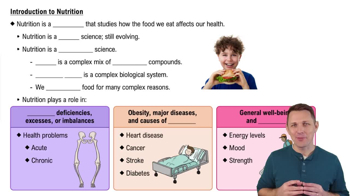
Nutrition is the science that studies how food affects the body’s health and function.
Macronutrients are nutrients needed in large amounts: carbohydrates, proteins, and fats.
Carbohydrates provide energy for the body, especially for the brain and muscles.
Proteins provide amino acids for growth, repair, and enzyme production.
Micronutrients are vitamins and minerals required in small amounts for body functions.
Water-soluble vitamins dissolve in water and are not stored; fat-soluble vitamins dissolve in fat and can be stored in the body.
BMR is the energy expended to maintain basic body functions at rest.
Energy balance occurs when calories consumed equal calories expended, maintaining body weight.
Fiber aids digestion, helps regulate blood sugar, and supports heart health.
Carbohydrates, proteins, fats, vitamins, minerals, and water.
Vitamins act as coenzymes or regulators in metabolic processes.
Minerals are inorganic elements needed for structure and regulation; vitamins are organic compounds needed for metabolism.
About 2-3 liters per day, depending on age, sex, and activity level.
The glycemic index measures how quickly a carbohydrate-containing food raises blood glucose levels.
Antioxidants protect cells from damage caused by free radicals.
Saturated fats have no double bonds and are solid at room temperature; unsaturated fats have one or more double bonds and are liquid.
Enzymes break down food molecules into absorbable units.
The small intestine is the primary site for nutrient absorption.
Malnutrition is a condition caused by inadequate or unbalanced nutrient intake.