What is the hybridization of each of the C, N, and O atoms in the following compounds:
Guida verificata passo dopo passo
1
Step 1: Analyze the first compound. Identify the hybridization of each atom based on its bonding and lone pairs. For the carbon atoms in the benzene ring, they are sp² hybridized because they are part of a conjugated π-system with alternating double bonds. The carbon attached to the benzene ring and the nitrogen is sp³ hybridized because it forms four sigma bonds.
Step 2: For the nitrogen atom in the first compound, it is sp³ hybridized because it forms three sigma bonds and has one lone pair. The oxygen atom in the carbonyl group is sp² hybridized because it forms one sigma bond and has a double bond with carbon. The oxygen atom in the ester group is sp³ hybridized because it forms two sigma bonds and has two lone pairs.
Step 3: Analyze the second compound. For the carbon atoms in the benzene rings, they are sp² hybridized due to their participation in a conjugated π-system. The carbon atom connecting the two benzene rings is sp³ hybridized because it forms four sigma bonds.
Step 4: For the nitrogen atom in the second compound, it is sp³ hybridized because it forms three sigma bonds and has one lone pair. The chlorine atom is not hybridized in the traditional sense but is associated with the ionic bond in the ammonium chloride group.
Step 5: Summarize the hybridization for each atom in both compounds: sp² for benzene carbons, sp³ for connecting carbons and nitrogen, sp² for carbonyl oxygen, and sp³ for ester oxygen. This understanding is based on the number of sigma bonds and lone pairs around each atom.
Risposta video verificata per un problema simile:
Questa soluzione video è stata consigliata dai nostri tutor come utile per risolvere questo problema.
Durata del video:
7m
Guarda un video:
0 Commenti
Concetti chiave
Ecco i concetti essenziali che devi comprendere per rispondere correttamente alla domanda.
Hybridization
Hybridization is the concept in organic chemistry that describes the mixing of atomic orbitals to form new hybrid orbitals. These hybrid orbitals are used to form covalent bonds in molecules. The type of hybridization (sp, sp2, sp3) depends on the number of bonds and lone pairs around the atom, influencing the geometry and reactivity of the compound.
Valence Shell Electron Pair Repulsion (VSEPR) Theory
VSEPR theory is a model used to predict the geometry of individual molecules based on the repulsion between electron pairs in the valence shell of the central atom. It helps determine the spatial arrangement of atoms in a molecule, which is crucial for understanding hybridization and molecular shape, particularly for carbon, nitrogen, and oxygen in organic compounds.
Functional groups are specific groups of atoms within molecules that are responsible for the characteristic chemical reactions of those molecules. In the context of the given compounds, understanding the functional groups (like amines, alcohols, and ethers) is essential for determining the hybridization of the involved atoms, as they influence the bonding and electronic environment.

 7:37 minuti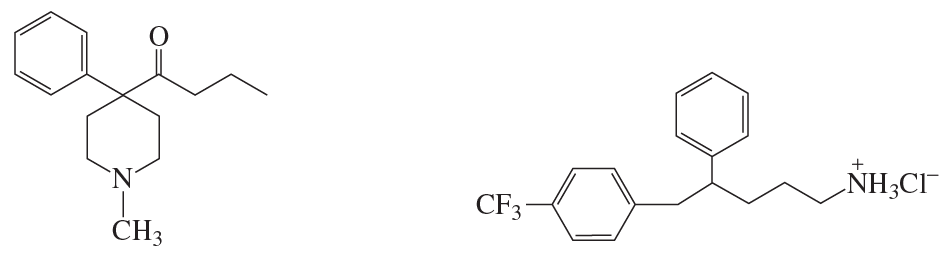
 Guida verificata passo dopo passo
 10:43
10:43