 Indietro
Organic Chemistry Exam 1 Review
 02:54
02:54
Termini in questo insieme (26)
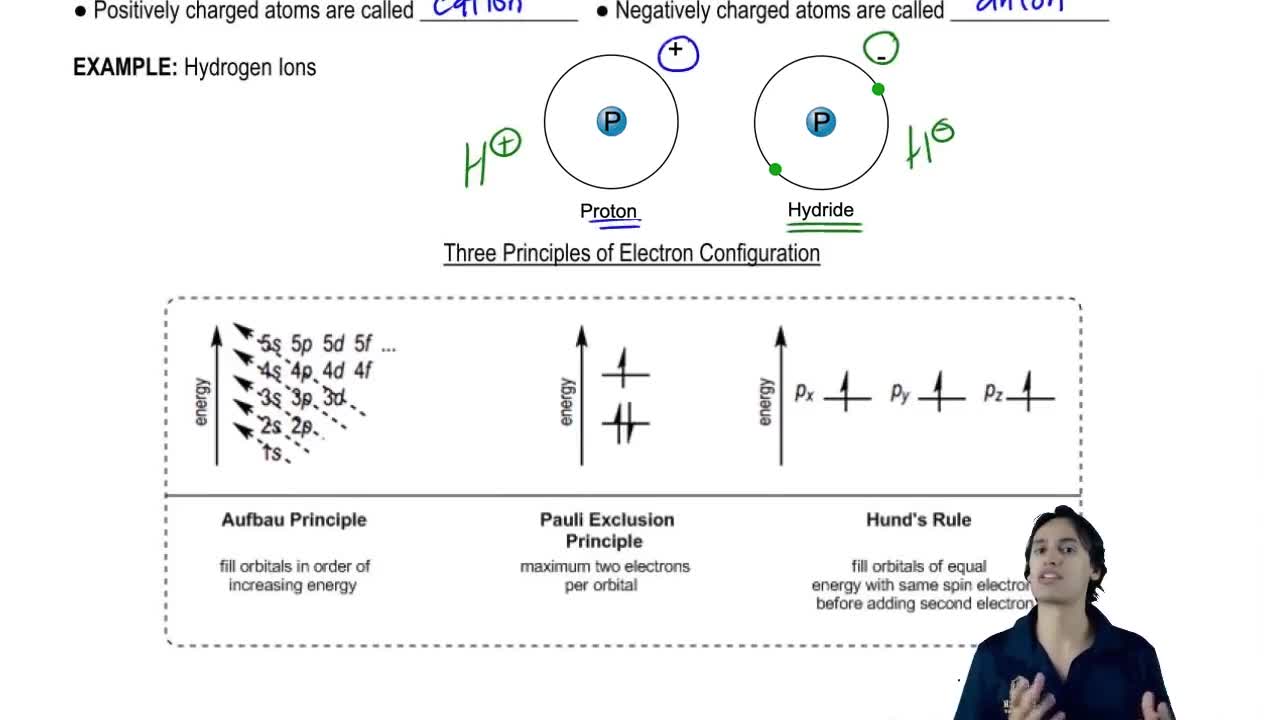
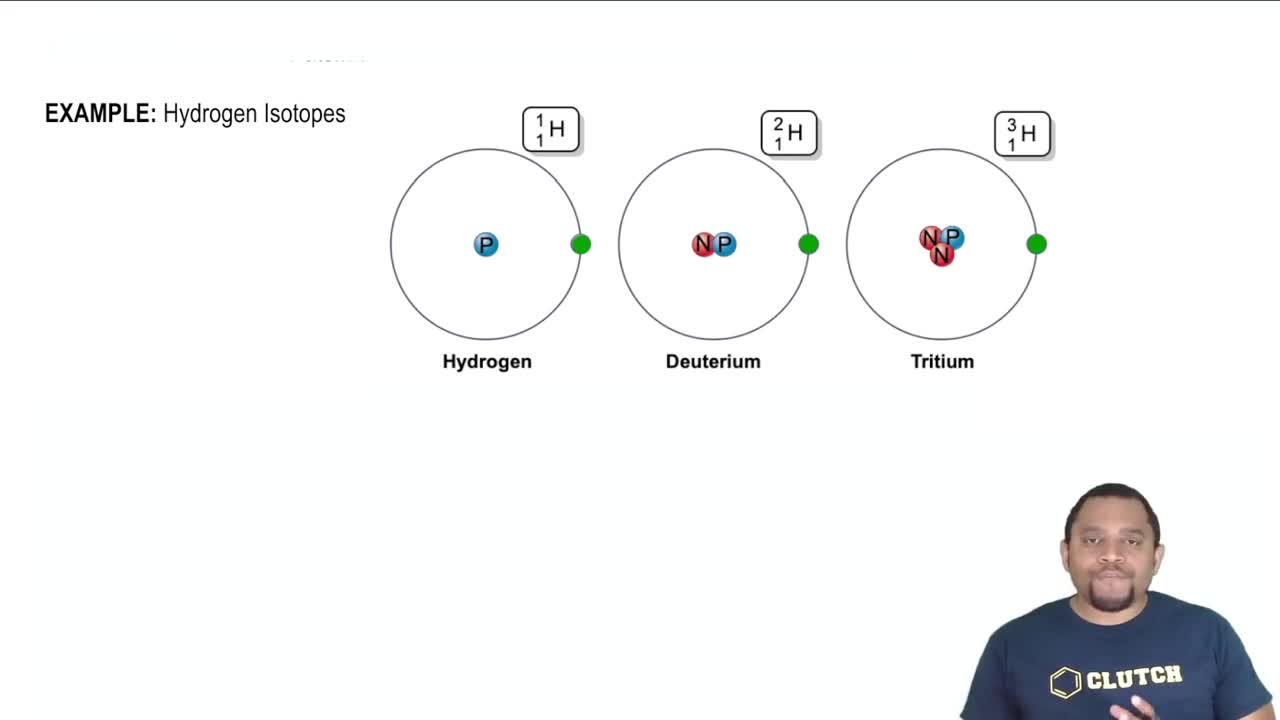
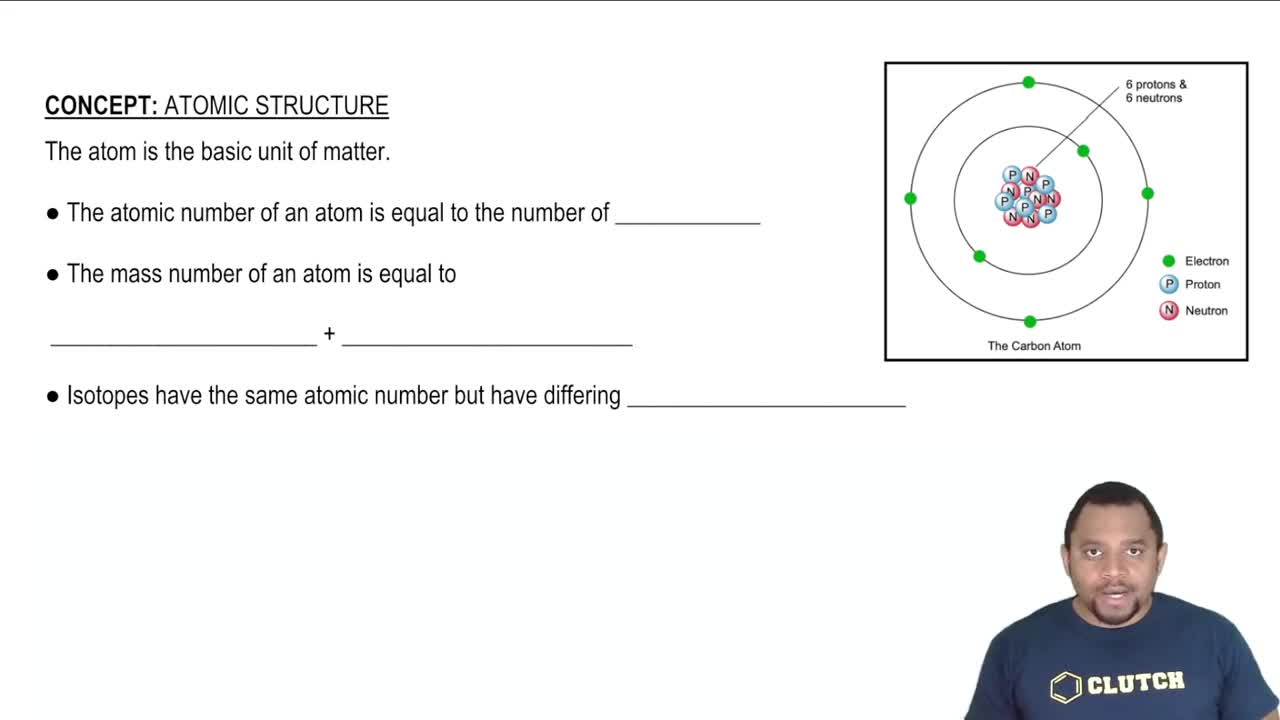
Atoms consist of protons (positive charge, in nucleus), neutrons (neutral, in nucleus), and electrons (negative charge, orbiting nucleus).
Describes the distribution of electrons in atomic orbitals, reflecting the wavelike properties of electrons.
Electrons in the outermost shell of an atom; determine bonding behavior and reactivity.
Diagrams showing valence electrons as dots around element symbols to represent covalent bonding.
Atoms tend to gain, lose, or share electrons to achieve 8 valence electrons, except H (2), sometimes Be and B.
Formal charge = (valence electrons in free atom) – (lone pair electrons) – ½(bonding electrons).
Elements like C, H, O, N, halogens have typical numbers of bonds and lone pairs; deviations affect formal charge.
Use double or triple bonds when single bonds and lone pairs don't satisfy octet rule; triple > double > single in strength and bond order.
Different valid Lewis structures for the same molecule; actual structure is a hybrid; resonance stabilizes ions.
σ bonds form by end-to-end orbital overlap; π bonds form by side-to-side overlap with a nodal plane between nuclei.
Single bonds (σ) can rotate freely; double/triple bonds cannot because rotation breaks π bonds.
A double bond = 1 σ + 1 π bond; a triple bond = 1 σ + 2 π bonds.
Measure of an atom's ability to attract electrons in a bond; trends increase across a period and up a group.
Nonpolar covalent: ΔEN < 0.5; Polar covalent: 0.5 ≤ ΔEN ≤ 2.0; Ionic: ΔEN > 2.0.
Shape based on electron pairs around central atom: linear (2), trigonal planar (3), tetrahedral (4).
Shape considering bonding and lone pairs: linear, trigonal planar, bent, tetrahedral, trigonal pyramidal.
Determined by bond polarity and shape; polar bonds may cancel in symmetrical molecules, making them nonpolar.
Lone pairs repel more than bonding pairs, causing bond angles to adjust and shapes to distort.
Compounds with the same molecular formula but different structures or shapes.
Atomic orbitals mix to form hybrids: sp (linear, 180°), sp2 (trigonal planar, ~120°), sp3 (tetrahedral, ~109°).
Convert among Lewis, Kekulé, condensed, and skeletal structures; interpret number of atoms, bonds, and lone pairs.
Include London dispersion, dipole-dipole, and hydrogen bonding; strength order: London < dipole-dipole < hydrogen bonds << covalent bonds.
Increase with stronger intermolecular forces and larger molecular size; branching lowers boiling points.
"Like dissolves like"; polar or ionic compounds dissolve in polar solvents (hydrophilic), nonpolar dissolve in nonpolar solvents (hydrophobic).
Acids produce \(\mathrm{H_3O^+}\) in water; bases produce \(\mathrm{OH^-}\).
Proton donors that release \(\mathrm{H^+}\) ions.