Ch. 22 - Catalysis in Organic Reactions and in Enzymatic Reactions
Bruice - Organic Chemistry 8th Edition
Bruice8th EditionOrganic ChemistryISBN: 9780135213711Non è quello che usi tu?Cambia libro di testo
Capitolo 22, Problema 26

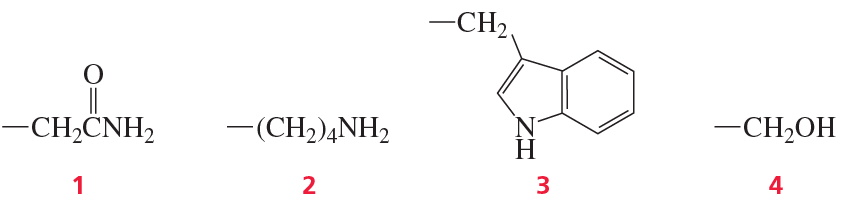
Which of the following amino acid side chains can form an imine with a substrate?
Structures of amino acids with potential to form imines, labeled 1 to 4, highlighting their side chains.

Guida verificata passo dopo passo
1
Understand the concept of imine formation: An imine is formed when a primary amine reacts with a carbonyl group (typically an aldehyde or ketone). The reaction involves the nucleophilic attack of the amine on the carbonyl carbon, followed by dehydration to form the imine.
Identify amino acid side chains that contain a primary amine group: In the context of amino acids, the side chain must have a primary amine group to participate in imine formation. Examples include lysine, which has an ε-amino group in its side chain.
Consider the reactivity of the primary amine: The primary amine in the side chain must be accessible and reactive enough to interact with the substrate's carbonyl group. Lysine's ε-amino group is a good candidate due to its nucleophilicity.
Exclude amino acids without primary amines in their side chains: Amino acids like alanine, valine, and phenylalanine do not have primary amines in their side chains and cannot form imines with a substrate.
Conclude that lysine is the amino acid side chain most likely to form an imine with a substrate due to the presence of its reactive ε-amino group.

Risposta video verificata per un problema simile:

Questa soluzione video è stata consigliata dai nostri tutor come utile per risolvere questo problema.
Durata del video:
3m

Concetti chiave

Ecco i concetti essenziali che devi comprendere per rispondere correttamente alla domanda.

Amino Acid Structure

Amino acids are organic compounds that serve as the building blocks of proteins. Each amino acid consists of a central carbon atom, an amino group, a carboxyl group, a hydrogen atom, and a variable side chain (R group). The nature of the side chain determines the chemical properties and reactivity of the amino acid, including its ability to form imines.
Video consigliato:
7:19
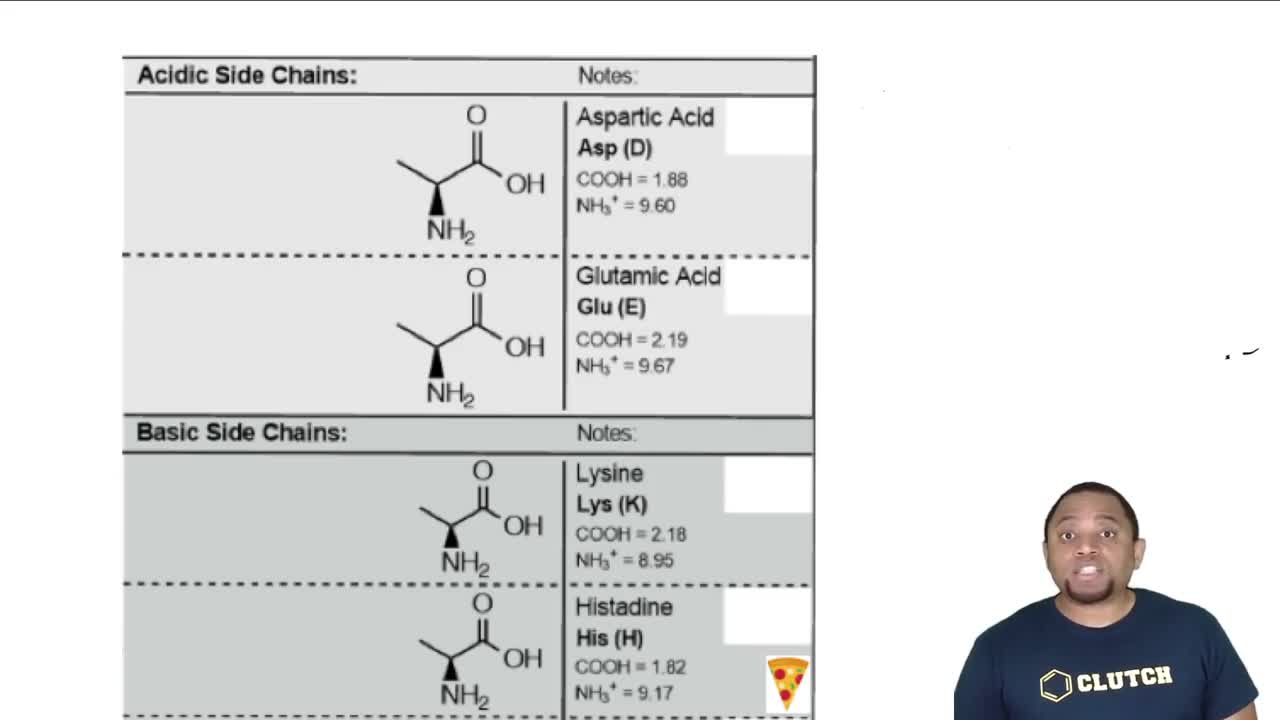
Charged Amino Acids

Imine Formation

Imine formation occurs when a carbonyl compound, such as an aldehyde or ketone, reacts with an amine. This reaction involves the nucleophilic attack of the amine on the carbonyl carbon, leading to the release of water and the formation of a double bond between the nitrogen and carbon, resulting in an imine. Understanding this reaction is crucial for identifying which amino acid side chains can participate in imine formation.
Video consigliato:
06:23
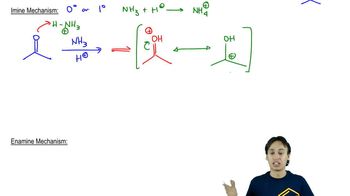
Imine Mechanism

Functional Groups in Amino Acids

The side chains of amino acids can contain various functional groups, such as hydroxyl, carboxyl, and amine groups. Amino acids with primary amine groups in their side chains, like lysine, are particularly relevant for imine formation, as they can directly react with carbonyl compounds. Recognizing the functional groups present in the side chains is essential for determining their reactivity and potential to form imines.
Video consigliato:
02:36
Identifying Functional Groups