Ch. 3 - An Introduction to Organic Compounds: Nomenclature, Physical Properties, and Structure
Bruice - Organic Chemistry 8th Edition
Bruice8th EditionOrganic ChemistryISBN: 9780135213711Non è quello che usi tu?Cambia libro di testo
Capitolo 3, Problema 59(1)

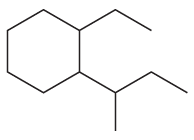
a. How many primary carbons does each of the following compounds have?
b. How many secondary carbons does each one have?
c. How many tertiary carbons does each one have?
1. Chemical structure diagram showing carbon rings and branches for identifying primary, secondary, and tertiary carbons.

Guida verificata passo dopo passo
1
Step 1: Identify the structure of the compound. The image shows a cyclohexane ring with one methyl group attached to the top carbon and two methyl groups attached to the bottom carbon.
Step 2: Define primary, secondary, and tertiary carbons. A primary carbon is bonded to only one other carbon atom, a secondary carbon is bonded to two other carbon atoms, and a tertiary carbon is bonded to three other carbon atoms.
Step 3: Analyze the structure for primary carbons. The methyl groups attached to the ring are primary carbons because each is bonded to only one other carbon atom.
Step 4: Analyze the structure for secondary carbons. The carbons in the cyclohexane ring that are bonded to two other carbons are secondary carbons.
Step 5: Analyze the structure for tertiary carbons. The bottom carbon in the cyclohexane ring is a tertiary carbon because it is bonded to three other carbons (two from the ring and one from the methyl group).

Risposta video verificata per un problema simile:

Questa soluzione video è stata consigliata dai nostri tutor come utile per risolvere questo problema.
Durata del video:
4m

Concetti chiave

Ecco i concetti essenziali che devi comprendere per rispondere correttamente alla domanda.

Primary Carbons

Primary carbons are carbon atoms that are bonded to only one other carbon atom. They are typically found at the ends of carbon chains or branches. In organic compounds, identifying primary carbons is crucial for understanding the structure and reactivity of the molecule.
Video consigliato:
Percorso guidato
1:11
Primary Protein Structure Example 1

Secondary Carbons

Secondary carbons are carbon atoms that are bonded to two other carbon atoms. These carbons are often located in the middle of carbon chains or branches. Recognizing secondary carbons is important for predicting the behavior of the compound during chemical reactions, especially in substitution and elimination processes.
Video consigliato:
Percorso guidato
1:50
Secondary Protein Structure Concept 1

Tertiary Carbons

Tertiary carbons are carbon atoms that are bonded to three other carbon atoms. They are typically found in branched structures and play a significant role in the stability and reactivity of organic compounds. Understanding tertiary carbons is essential for grasping concepts like carbocation stability and reaction mechanisms.
Video consigliato:
Percorso guidato
2:07
Tertiary Protein Structure Concept 1