Ch. 5 - Chemical Reaction Analysis: Thermodynamics and Kinetics
Mullins - Organic Chemistry: A Learner Centered Approach 1st Edition
Mullins1st EditionOrganic Chemistry: A Learner Centered ApproachISBN: 9780137566471Non è quello che usi tu?Cambia libro di testo
Capitolo 4, Problema 24a

For the following acid–base reaction, (a) identify the acid and conjugate acid

Guida verificata passo dopo passo
1
Step 1: Recall the definitions of acid and conjugate acid. An acid is a species that donates a proton (H⁺) in a reaction, while the conjugate acid is the species formed when a base accepts a proton.
Step 2: Write the balanced chemical equation for the acid–base reaction. Identify the reactants and products, and observe which species donates a proton and which species accepts it.
Step 3: Identify the acid in the reaction. Look for the species that loses a proton (H⁺) during the reaction. This is the acid.
Step 4: Identify the conjugate acid. After the base accepts a proton, the resulting species is the conjugate acid. Look for the product that has gained an H⁺ compared to its corresponding base.
Step 5: Verify your identification by checking the relationship between the acid and its conjugate base, as well as the base and its conjugate acid. Ensure that the acid and conjugate acid differ by exactly one proton (H⁺).

Risposta video verificata per un problema simile:

Questa soluzione video è stata consigliata dai nostri tutor come utile per risolvere questo problema.
Durata del video:
2m

Concetti chiave

Ecco i concetti essenziali che devi comprendere per rispondere correttamente alla domanda.

Acids and Bases

In organic chemistry, acids are substances that can donate a proton (H+) to another substance, while bases are substances that can accept a proton. This definition is rooted in the Brønsted-Lowry theory, which emphasizes the transfer of protons in acid-base reactions. Understanding the roles of acids and bases is crucial for analyzing reaction mechanisms and predicting the products of chemical reactions.
Video consigliato:
02:49
The Lewis definition of acids and bases.

Conjugate Acid-Base Pairs

A conjugate acid-base pair consists of two species that differ by the presence or absence of a proton. When an acid donates a proton, it forms its conjugate base, while the base that accepts the proton becomes its conjugate acid. Recognizing these pairs is essential for understanding the equilibrium of acid-base reactions and the strength of acids and bases in a given reaction.
Video consigliato:
Percorso guidato
2:56
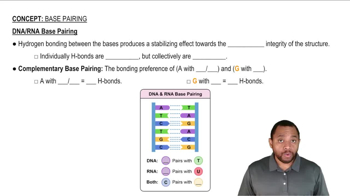
Base Pairing Concept 1

Identifying Acids and Conjugate Acids

To identify the acid and its conjugate acid in a reaction, one must analyze the reactants and products. The acid is the species that donates a proton, while the conjugate acid is the species formed after the base accepts that proton. This identification process is fundamental for predicting the direction of the reaction and understanding the underlying chemical principles.
Video consigliato:
02:47
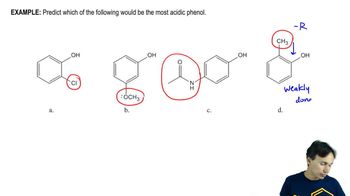
Identify the most acidic phenol