Ch. 17 - Reactions of Aromatic Compounds
Wade - Organic Chemistry 9th Edition
Wade9th EditionOrganic ChemistryISBN: 9780135213728Non è quello che usi tu?Cambia libro di testo
Capitolo 17, Problema 50d

Predict the major products formed when benzene reacts (just once) with the following reagents.
d. bromine + a nail

Guida verificata passo dopo passo
1
Step 1: Recognize the type of reaction. Benzene is an aromatic compound, and the reaction with bromine (Br₂) in the presence of a metal (like a nail, which is typically iron or steel) suggests an electrophilic aromatic substitution (EAS) reaction. The nail acts as a source of iron, which can generate a catalyst such as FeBr₃.
Step 2: Understand the role of the catalyst. The FeBr₃ catalyst is formed when iron reacts with bromine. This catalyst helps polarize the Br-Br bond in bromine, making one of the bromine atoms more electrophilic and capable of attacking the benzene ring.
Step 3: Describe the mechanism of the reaction. The benzene ring donates π-electrons to the electrophilic bromine atom, forming a sigma complex (also called an arenium ion). This intermediate temporarily disrupts the aromaticity of benzene.
Step 4: Regenerate aromaticity. A base (often Br⁻, which is released during the reaction) removes a proton (H⁺) from the sigma complex, restoring the aromaticity of the benzene ring and forming bromobenzene as the major product.
Step 5: Predict the product. The major product of this reaction is bromobenzene (C₆H₅Br), where one hydrogen atom on the benzene ring is replaced by a bromine atom. This is the result of the electrophilic aromatic substitution reaction.

Risposta video verificata per un problema simile:

Questa soluzione video è stata consigliata dai nostri tutor come utile per risolvere questo problema.
Durata del video:
4m

Concetti chiave

Ecco i concetti essenziali che devi comprendere per rispondere correttamente alla domanda.

Electrophilic Aromatic Substitution

Electrophilic aromatic substitution (EAS) is a fundamental reaction mechanism in organic chemistry where an electrophile replaces a hydrogen atom on an aromatic ring. In the case of benzene, the aromatic system is stabilized by resonance, making it less reactive than alkenes. However, when a strong electrophile, such as bromine in the presence of a catalyst, is introduced, it can lead to the substitution of a hydrogen atom, forming a bromobenzene product.
Video consigliato:
03:07
EAS Review

Bromination of Aromatic Compounds

Bromination is a specific type of electrophilic aromatic substitution where bromine (Br2) reacts with an aromatic compound. In the presence of a catalyst like iron (Fe) or aluminum chloride (AlCl3), bromine can generate a more reactive bromonium ion, which facilitates the substitution. The reaction typically results in the formation of brominated aromatic products, such as bromobenzene, while releasing hydrogen bromide (HBr) as a byproduct.
Video consigliato:
00:54
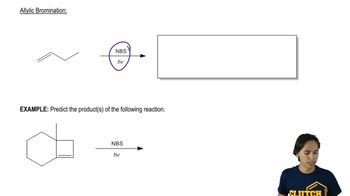
Mechanism of Allylic Bromination.

Radical Mechanism

In the context of the question, the presence of a nail suggests a radical mechanism may be involved, particularly if the nail is made of iron. This can lead to the generation of bromine radicals, which can react with benzene to form bromobenzene. This radical pathway differs from the traditional electrophilic substitution, as it involves the formation of radical intermediates rather than a stable carbocation, influencing the reaction's selectivity and product distribution.
Video consigliato:
03:28
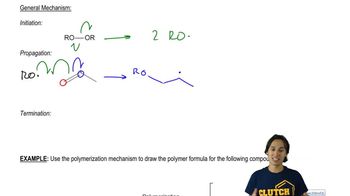
The mechanism of Radical Polymerization.