

Ch. 18 - Ketones and Aldehydes
Wade - Organic Chemistry 9th Edition
Wade9th EditionOrganic ChemistryISBN: 9780135213728Non è quello che usi tu?Cambia libro di testo
Capitolo 18, Problema 28d

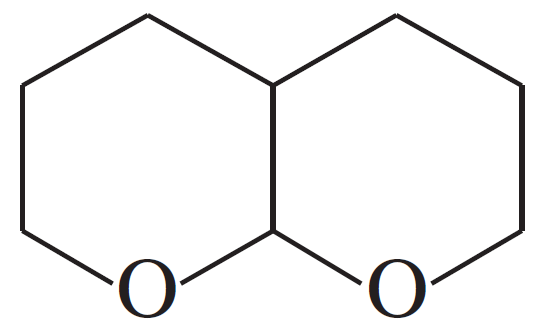
Propose a mechanism for the acid-catalyzed hydrolysis of the acetal given in Problem 18-26(f).

Guida verificata passo dopo passo
1
Step 1: Protonation of one of the oxygen atoms in the acetal structure occurs under acidic conditions. This increases the electrophilicity of the carbon atom attached to the protonated oxygen.
Step 2: The bond between the protonated oxygen and the carbon breaks, leading to the formation of a carbocation intermediate and a neutral alcohol molecule.
Step 3: Water, acting as a nucleophile, attacks the carbocation intermediate, forming a protonated hemiacetal intermediate.
Step 4: Deprotonation of the protonated hemiacetal occurs, resulting in the formation of a neutral hemiacetal.
Step 5: The process repeats for the second oxygen atom in the acetal structure, ultimately leading to the formation of two molecules of alcohol and one molecule of aldehyde or ketone, depending on the original acetal structure.

Risposta video verificata per un problema simile:

Questa soluzione video è stata consigliata dai nostri tutor come utile per risolvere questo problema.
Durata del video:
12m

Concetti chiave

Ecco i concetti essenziali che devi comprendere per rispondere correttamente alla domanda.

Acetal Structure and Formation

Acetals are organic compounds formed from the reaction of an aldehyde or ketone with an alcohol in the presence of an acid catalyst. They consist of a carbon atom bonded to two alkoxy groups (–OR) and one hydrogen atom. Understanding the structure of acetals is crucial for predicting their reactivity, particularly in hydrolysis reactions.
Video consigliato:
04:29
Acetal Protecting Group

Acid-Catalyzed Hydrolysis

Acid-catalyzed hydrolysis is a reaction where an acetal reacts with water in the presence of an acid, leading to the regeneration of the original aldehyde or ketone and alcohol. The acid protonates the acetal oxygen, making it more susceptible to nucleophilic attack by water, facilitating the cleavage of the C–O bond. This mechanism is essential for understanding how acetals can revert to their parent carbonyl compounds.
Video consigliato:
03:09
Acid Catalyzed

Mechanistic Steps in Organic Reactions

Understanding the mechanistic steps in organic reactions involves identifying the sequence of bond-breaking and bond-forming events. In the case of acid-catalyzed hydrolysis of acetals, the mechanism typically includes protonation of the acetal, nucleophilic attack by water, and subsequent deprotonation. Familiarity with these steps is vital for accurately proposing a detailed mechanism for the reaction.
Video consigliato:
Percorso guidato
5:42
Step-Growth Polymers Concept 2