Ch. 22 - Condensations and Alpha Substitutions of Carbonyl Compounds
Wade - Organic Chemistry 9th Edition
Wade9th EditionOrganic ChemistryISBN: 9780135213728Non è quello che usi tu?Cambia libro di testo
Capitolo 22, Problema 64a

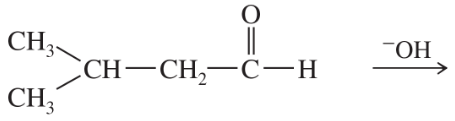
Propose mechanisms for the reactions shown in Problems 22-62 part (a).

Guida verificata passo dopo passo
1
Step 1: Identify the type of reaction occurring in the given problem. For example, determine if it is a substitution, elimination, addition, or rearrangement reaction. This will help guide the mechanism you propose.
Step 2: Analyze the reactants and reagents provided. Look for functional groups, leaving groups, nucleophiles, electrophiles, or catalysts that may influence the reaction pathway.
Step 3: Propose the first step of the mechanism. This often involves the interaction between the nucleophile and electrophile or the departure of a leaving group. Use curved arrows to show the movement of electrons.
Step 4: Continue the mechanism step-by-step, ensuring that each intermediate is chemically reasonable. Consider resonance stabilization, carbocation rearrangements, or other stabilizing effects if applicable.
Step 5: Conclude the mechanism by showing the formation of the final product. Verify that all atoms and charges are accounted for, and ensure the mechanism aligns with the reaction conditions provided.

Risposta video verificata per un problema simile:

Questa soluzione video è stata consigliata dai nostri tutor come utile per risolvere questo problema.
Durata del video:
4m

Concetti chiave

Ecco i concetti essenziali che devi comprendere per rispondere correttamente alla domanda.

Reaction Mechanisms

A reaction mechanism is a step-by-step description of how a chemical reaction occurs at the molecular level. It outlines the sequence of elementary steps, including bond breaking and formation, and the intermediates formed during the reaction. Understanding mechanisms is crucial for predicting the products and understanding the kinetics and thermodynamics of the reaction.
Video consigliato:
02:16
Heck Reaction Mechanism

Types of Organic Reactions

Organic reactions can be classified into several types, including substitution, addition, elimination, and rearrangement reactions. Each type has distinct characteristics and mechanisms. Recognizing the type of reaction helps in predicting the behavior of reactants and the nature of the products formed, which is essential for proposing accurate mechanisms.
Video consigliato:
00:29
What you need to know about types of chemical reactions.

Curved Arrow Notation

Curved arrow notation is a visual representation used in organic chemistry to depict the movement of electrons during chemical reactions. Arrows indicate the direction of electron flow, showing how bonds are broken and formed. Mastery of this notation is vital for illustrating reaction mechanisms clearly and accurately, allowing for better understanding and communication of complex reactions.
Video consigliato:
06:20
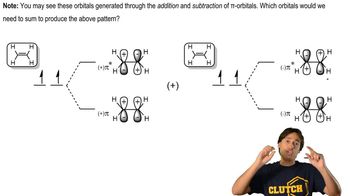
Alternative MO Notation for Dienes