 Indietro
Heat Transfer: Conduction, Convection, Radiation, and Related Phenomena
Guida di studio - Note intelligenti
 Appunti personalizzati basati sui tuoi materiali, ampliati con definizioni chiave, esempi e contesto.
Heat Transfer
Introduction to Heat Transfer
Heat transfer is a fundamental concept in physics, describing how energy moves from hotter objects to cooler ones. There are three primary mechanisms by which heat is transferred: conduction, convection, and radiation. Understanding these mechanisms is essential for analyzing physical systems and their thermal behavior.
Conduction: Transfer of internal energy through direct molecular and electron collisions, mainly in solids.
Convection: Transfer of heat by the bulk movement of fluids (liquids or gases).
Radiation: Transfer of energy by electromagnetic waves, which can occur even in a vacuum.
Conduction
Mechanism of Conduction
Conduction occurs when heat is transferred through a material without the material itself moving. This process is most efficient in solids, where atoms and electrons are closely packed.
Good Conductors: Materials with loosely held electrons, such as metals (e.g., silver, copper), transfer heat quickly.
Poor Conductors (Insulators): Materials with tightly held electrons, such as glass, wool, wood, paper, cork, plastic foam, and air, transfer heat slowly.
Insulation: Insulators do not prevent heat flow but slow its rate. Substances that trap air (e.g., wool, fur, feathers, snow) are effective insulators.
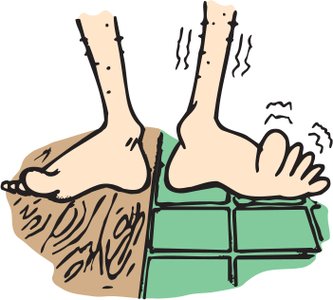
Example:
If you hold one end of a metal bar against ice, heat flows from your hand to the metal and then to the ice, making the bar feel cold. Cold does not flow; heat always moves from warmer to cooler regions.
Application:
Insulation in buildings (e.g., rock wool or fiberglass) slows the transfer of heat, keeping interiors warmer in winter and cooler in summer. 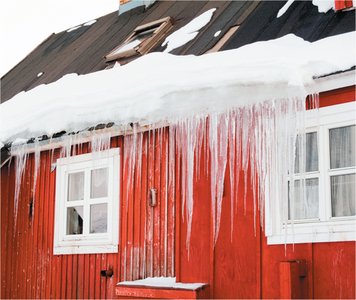
Convection
Mechanism of Convection
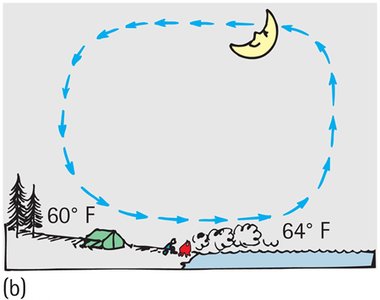
Convection is the transfer of heat by the movement of fluids. When a fluid is heated, it expands, becomes less dense, and rises, while cooler, denser fluid sinks, creating a convection current.
Bulk Motion: Only fluids (liquids and gases) can transfer heat by convection.
Warm Air Rises: Warm air expands and is buoyed upward until its density matches the surrounding air.
Cooling by Expansion: When air expands, it cools; when compressed, it warms.
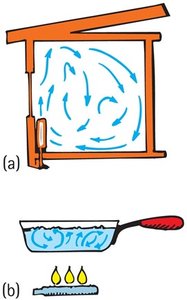
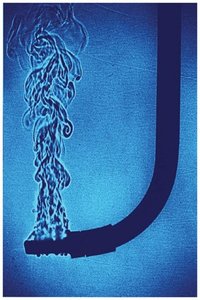
Example:
The visible shimmer above a hot stove or asphalt is caused by convection currents in the air. Smoke from a fire rises and mixes with cooler air. 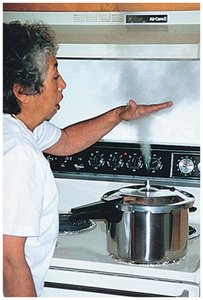
Application:
Earth’s atmosphere acts as a blanket, keeping valleys warmer than mountaintops. Winds are caused by uneven heating of the ground, leading to convection currents. 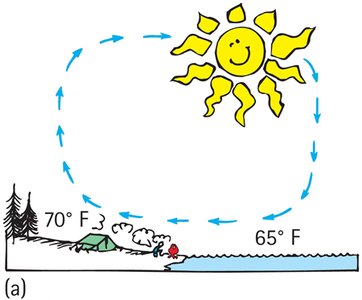
Radiation
Mechanism of Radiation
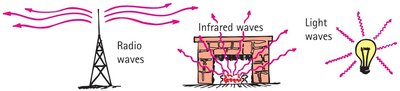
Radiation is the transfer of energy by electromagnetic waves. Unlike conduction and convection, radiation does not require a medium and can occur in a vacuum.
Examples: Solar energy from the Sun, radio waves, light from bulbs.
All objects above absolute zero emit radiant energy.
Earth emits infrared radiation; the Sun emits visible light.
Wavelength and Frequency
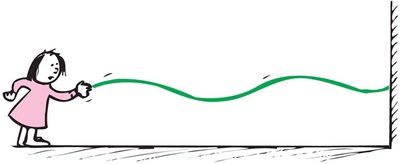
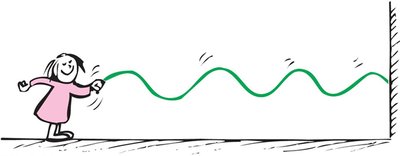
The wavelength of radiation is related to the frequency of vibration of the electromagnetic wave.
Low-frequency vibration produces long-wavelength waves.
High-frequency vibration produces short-wavelength waves.
Emission and Temperature
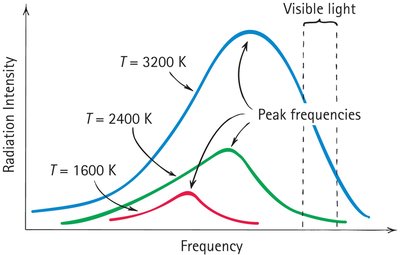
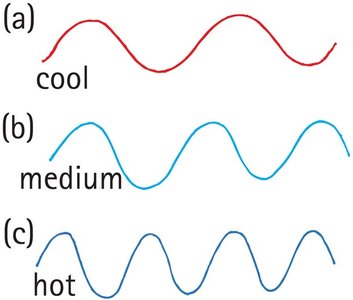
The frequency of radiation emitted by an object is proportional to its absolute temperature:
Room-temperature objects emit infrared radiation.
At higher temperatures, objects emit visible light (red, yellow, white).
Absorption and Emission
Absorption occurs along with emission.
Good absorbers are also good emitters; poor absorbers are poor emitters.
Net absorption or emission depends on the temperature difference with surroundings.
Example:
A hot pizza placed in the snow is a net emitter, as it loses more energy than it absorbs.
Application:
Dirty snow melts faster in sunlight because it absorbs more radiant energy than clean snow, which reflects more.
Reflection of Radiant Energy
Reflection is the opposite of absorption. Surfaces that reflect little radiant energy appear dark. Good reflectors are poor absorbers. 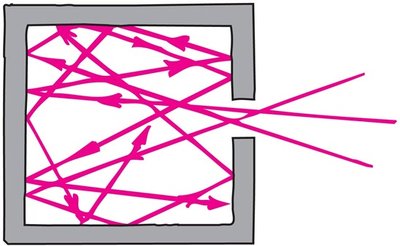
Example:
A black object absorbs visible light readily, while a white object reflects it.
Newton’s Law of Cooling
Rate of Cooling
Newton’s law of cooling states that the rate of cooling (or warming) of an object is proportional to the temperature difference between the object and its surroundings:
Objects cool faster when the temperature difference is greater.
Objects warm faster when placed in warmer surroundings.
Example:
A hot apple pie cools faster in a freezer than on a kitchen table. Frozen food warms faster in a warm room than in a cold room.
Global Warming and the Greenhouse Effect
The Greenhouse Effect
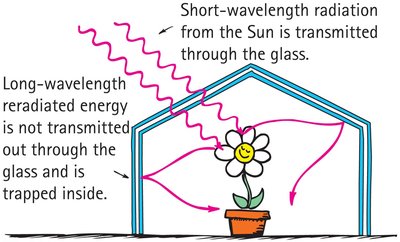
The greenhouse effect is named for the warming effect observed in greenhouses. It is caused by the trapping of heat by certain gases or materials that are transparent to some wavelengths but opaque to others.
Short-wavelength solar radiation passes through glass or atmospheric gases.
Absorbed energy is reradiated as longer-wavelength infrared radiation, which is trapped.
Example:
A car’s interior heats up when windows are closed on a sunny day because short-wavelength sunlight enters, but reradiated long-wavelength energy cannot escape.
Global Warming
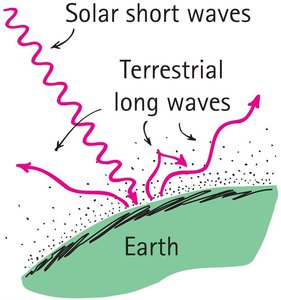
Global warming is the increase in Earth’s average temperature due to the greenhouse effect. Atmospheric gases absorb and re-emit terrestrial infrared radiation, trapping heat.
Energy from the Sun is absorbed and reradiated by Earth as longer-wavelength radiation.
Greenhouse gases absorb more infrared radiation than visible light.
Long-term effects on climate are a major concern.
Solar Power
Solar Energy Potential
Solar power is a renewable energy source with immense potential. More energy from the Sun hits Earth in one hour than all the energy consumed by humans in a year.
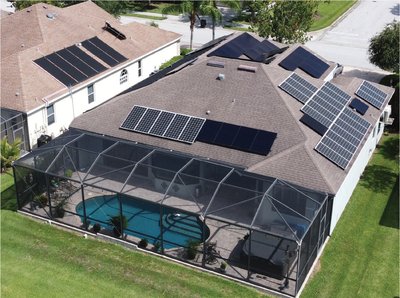
Solar panels convert sunlight into electricity, reducing reliance on fossil fuels.
 Additional info: Academic context was added to clarify mechanisms, provide examples, and expand explanations for each heat transfer method and related phenomena.
