 Indietro
Introduction to Psychology: Basic Psychological Processes
 01:11
01:11
Termini in questo insieme (14)
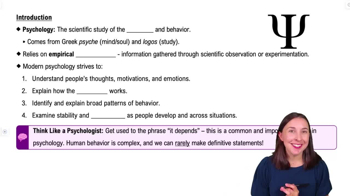
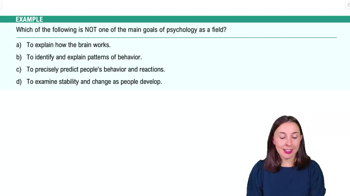
Psychology is the scientific study of the mind, brain, and behavior, considering multiple levels of analysis.
Challenges include difficulty predicting behavior, interdependent psychological influences, individual differences, reciprocal determinism, and cultural shaping of behavior.
Psychology uses a systematic approach to evidence, starting with empiricism, acquiring knowledge through observation, and developing testable theories and hypotheses.
A scientific theory explains and forecasts many events of the same type and generates testable predictions called hypotheses.
Misconceptions include thinking a theory explains only one event or is just an educated guess; in reality, theories are well-supported and withstand attempts at refutation.
Confirmation bias is the tendency to seek evidence supporting our hypothesis while neglecting or distorting contrary evidence.
Claims that seem scientific but lack defenses from bias, differing from metaphysical claims, and often not thoroughly researched.
It explains anxiety from awareness of inevitable death and how people seek worldviews providing meaning and continuity, tested by manipulating mortality salience.
Meta-learning or 'learning to learn' involves understanding effective learning strategies, monitoring comprehension, and adjusting approaches as needed.
Active reading involves paying attention while reading and understanding the material before moving on.
Self-questioning facilitates attention, retention, and learning of reading material.
Psychology considers biological (molecular/brain structure), psychological (thoughts, feelings, emotions), and social-cultural (behavioral and relational) levels.
It is the concept that people influence one another's behavior in a two-way interaction.
They refer to cultural perspectives: Emic focuses on culture-specific aspects, while Etic examines universal traits across cultures.