Examines how cultural and social factors influence behavior, thoughts, and emotions, emphasizing understanding within cultural contexts and diversity's impact on psychological experiences.
Behavioral perspective
Focuses on observable behaviors learned through environmental interactions, highlighting conditioning, reinforcement, and punishment as key behavior-shaping concepts.
Cognitive perspective
Studies mental processes like thinking, memory, problem-solving, and decision-making, exploring how information is acquired, processed, stored, and used.
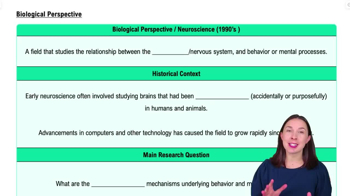
Biological/Biopsychology perspective
Investigates the relationship between the brain, nervous system, hormones, genetics, and behavior and mental processes.
Humanistic perspective
Emphasizes personal growth, free will, and self-actualization, viewing people as inherently good and focusing on individual potential and self-expression.
Psychoanalysis/Psychodynamic perspective
Explores unconscious thoughts, feelings, and memories, focusing on how early childhood experiences and unresolved conflicts shape current behavior and emotions.
 Indietro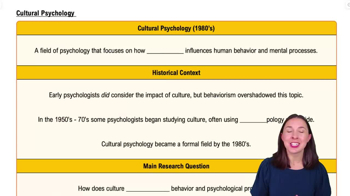
 03:59
03:59