Skip to main content
Introduction to Sociology
Il mio corso
Impara
AI Tutor
Guide di studio
Flashcard
Esplora
Prova l'app
Il mio corso
Impara
AI Tutor
Guide di studio
Flashcard
Esplora
Prova l'app
Indietro
Types of Groups definitions
Puoi toccare per girare la carta.
Group
Puoi toccare per girare la carta.
👆
Group
Two or more individuals who interact regularly, share a sense of identity, and perceive themselves as a collective.
Avanzamenti del tracciato
I pulsanti di controllo sono stati cambiati in modalità "navigazione".
1/14
Flashcard correlate
Video consigliati
Types of Groups quiz
Types of Groups
15 Termini
VideoThumbView.guidedCourse
01:56
Primary and Secondary Groups
107
views
VideoThumbView.guidedCourse
01:03
Types of Group Example 3
117
views
VideoThumbView.guidedCourse
01:52
Types of Groups Example 2
114
views
Termini in questo insieme (14)
Nascondere definizioni
Group
Two or more individuals who interact regularly, share a sense of identity, and perceive themselves as a collective.
Category
Individuals with similar traits or status lacking regular interaction or social ties, such as age cohorts or professions.
Crowd
People sharing a physical space without sustained interaction or shared identity, like concertgoers or elevator occupants.
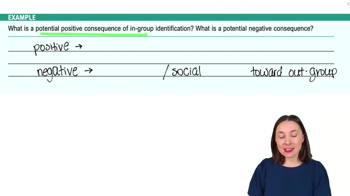
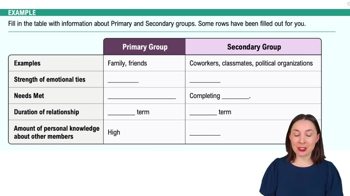
Primary Group
Small, close-knit collective marked by strong emotional bonds and long-term, personal relationships, such as family or close friends.
Secondary Group
Larger, more impersonal collective focused on tasks or goals, with weaker emotional ties and often short-term connections.
In-group
Collective with which an individual identifies, often fostering loyalty, trust, and a sense of belonging among members.
Out-group
Collective with which an individual does not identify, sometimes leading to competition, opposition, or social exclusion.
Group Identity
Shared sense of belonging and alignment within a collective, shaping members' perceptions and interactions.
Social Belonging
Emotional experience of acceptance and inclusion within a collective, often fulfilling fundamental human needs.
Reference Group
Collective used as a standard for self-evaluation, influencing norms, behaviors, and life expectations, even if not personally joined.
Favoritism
Preference or loyalty shown toward one's own collective, often resulting in preferential treatment of its members.
Discrimination
Unjust treatment or exclusion of individuals based on their membership in a different collective.
Socialization
Process by which individuals learn norms, values, and behaviors through interaction with collectives.
Social Stratification
Systematic ranking of collectives or individuals in a hierarchy, often influenced by group affiliations.
 IndietroIndietro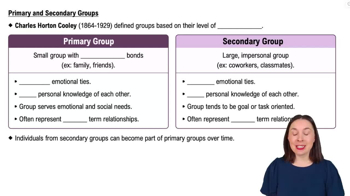
 01:56
01:56