Ch. 1 - Introduction to Statistics
Larson - Elementary Statistics: Picturing the World 8th Edition
Larson8th EditionElementary Statistics: Picturing the WorldISBN: 9780137493470Non è quello che usi tu?Cambia libro di testo
Capitolo 1, Problema 1.3.20d

"Researchers in Japan tested the effect of cannabidiol (CBD) in treating late teenagers with social anxiety disorder (SAD). Thirty-seven 18- to 19-year-old teenagers with SAD took part in the study. The patients were assigned at random to receive a daily dose of either CBD or a placebo for 4 weeks. Symptoms were measured using The Fear of Negative Evaluation Questionnaire and the Liebowitz Social Anxiety Scale at the beginning and end of the treatment. (Source: Frontiers in Psychology)
How could blocking be used in designing this experiment?"

Guida verificata passo dopo passo
1
Step 1: Understand the concept of blocking in experimental design. Blocking is a technique used to control for variability among experimental units by grouping them into blocks based on certain characteristics. This helps reduce the impact of confounding variables and increases the precision of the experiment.
Step 2: Identify potential sources of variability among the participants in the study. For example, factors such as gender, baseline severity of social anxiety disorder (SAD), or other demographic characteristics might influence the response to the treatment.
Step 3: Divide the participants into blocks based on these identified characteristics. For instance, you could create blocks based on gender (male and female) or baseline severity of SAD (mild, moderate, severe). Each block should contain participants who are similar with respect to the chosen characteristic.
Step 4: Within each block, randomly assign participants to either the CBD treatment group or the placebo group. This ensures that the comparison between the two groups is fair and minimizes the influence of the blocking variable on the treatment effect.
Step 5: Analyze the results within each block and compare the outcomes between the treatment and placebo groups. This approach allows researchers to account for variability due to the blocking variable and obtain more reliable conclusions about the effect of CBD on social anxiety disorder.

Risposta video verificata per un problema simile:

Questa soluzione video è stata consigliata dai nostri tutor come utile per risolvere questo problema.
Durata del video:
3m

Concetti chiave

Ecco i concetti essenziali che devi comprendere per rispondere correttamente alla domanda.

Randomization

Randomization is a fundamental principle in experimental design that involves randomly assigning participants to different treatment groups. This process helps ensure that each group is comparable at the start of the experiment, minimizing biases and confounding variables. In the context of the study, randomization allows researchers to attribute any observed effects on social anxiety symptoms directly to the treatment (CBD or placebo) rather than other factors.
Video consigliato:
Percorso guidato
07:09
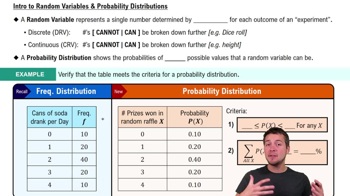
Intro to Random Variables & Probability Distributions

Blocking

Blocking is a technique used in experimental design to control for variables that could affect the outcome of the study. By grouping participants into blocks based on certain characteristics (e.g., age, severity of anxiety), researchers can ensure that these variables are evenly distributed across treatment groups. This helps to reduce variability within treatment groups and increases the precision of the results, making it easier to detect the true effect of the treatment.

Measurement Scales

Measurement scales are tools used to quantify variables in research, allowing for the assessment of changes over time. In this study, The Fear of Negative Evaluation Questionnaire and the Liebowitz Social Anxiety Scale are used to measure social anxiety symptoms before and after treatment. Understanding these scales is crucial for interpreting the results, as they provide a standardized way to evaluate the effectiveness of CBD in reducing anxiety symptoms among participants.
Video consigliato:
Percorso guidato
04:13
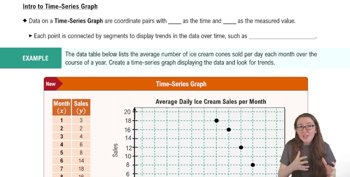
Creating Time-Series Graphs
Pratica correlata
Domanda del libro di testo

Identify the sampling technique used, and discuss potential sources of bias (if any). Explain.

A student asks 18 friends to participate in a psychology experiment.

195
views

Domanda del libro di testo

A company wants to test the effectiveness of a new acne cream. The company recruits 500 girls ages 13 to 17 who have acne. The subjects are randomly assigned into two groups. One group is given the acne cream and the other is given a placebo that looks exactly like the acne cream. Both groups apply the cream daily for two months. Facial photos are taken at the beginning and end of the treatment to compare results.

b. Identify a potential problem with the experimental design being used and suggest a way to improve it.

202
views
Domanda del libro di testo

"Researchers in Japan tested the effect of cannabidiol (CBD) in treating late teenagers with social anxiety disorder (SAD). Thirty-seven 18- to 19-year-old teenagers with SAD took part in the study. The patients were assigned at random to receive a daily dose of either CBD or a placebo for 4 weeks. Symptoms were measured using The Fear of Negative Evaluation Questionnaire and the Liebowitz Social Anxiety Scale at the beginning and end of the treatment. (Source: Frontiers in Psychology)

The experiment is described as a placebo-controlled, double-blind study. Explain what this means."

48
views
Domanda del libro di testo

A company wants to test the effectiveness of a new acne cream. The company recruits 500 girls ages 13 to 17 who have acne. The subjects are randomly assigned into two groups. One group is given the acne cream and the other is given a placebo that looks exactly like the acne cream. Both groups apply the cream daily for two months. Facial photos are taken at the beginning and end of the treatment to compare results.

c. How could this experiment be designed to be double-blind?

217
views
Domanda del libro di testo

Determine whether the study is an observational study or an experiment. Explain.

Researchers conduct a study to determine whether a medication based on fish oil known as omega-3 carboxylic acids is effective in reducing the risk of cardiac events in people already at risk. In the study, 13,078 patients are randomly chosen to receive either omega-3 carboxylic acids or a placebo of corn oil daily. Researchers compare the number of cardiac events of the two groups over similar follow-up periods of time. (Source: American Heart Association)

180
views
Domanda del libro di testo

200 students volunteer for an experiment to test the effects of sleep deprivation on memory recall. The students will be placed in one of five different treatment groups, including the control group.

Explain how you could design an experiment so that it uses a randomized block design.

166
views