 Indietro
Trigonometry Unit 1 Key Concepts and Identities
 2:28
2:28
Termini in questo insieme (20)
Multiply the decimal part by 60 to get minutes; multiply the decimal part of minutes by 60 to get seconds.
Decimal degrees = degrees + (minutes ÷ 60) + (seconds ÷ 3600).
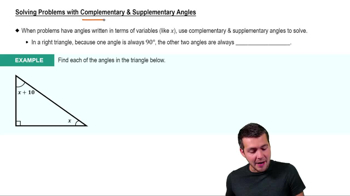
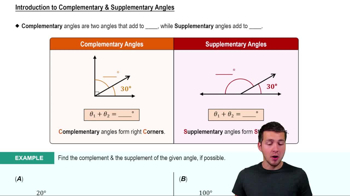
The angle that, when added to the given angle, equals \(90^\circ\).
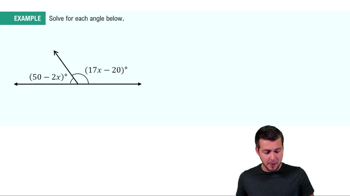
The angle that, when added to the given angle, equals \(180^\circ\).
Angles that share the same terminal side, differing by multiples of \(360^\circ\) or \(2\pi\) radians.
Use complementary, supplementary, and coterminal angle rules to determine unknown angles.
Use coordinates \((x,y)\) and radius \(r=\sqrt{x^2+y^2}\) to find sine, cosine, and tangent.
Use the equation to find coordinates or ratios, then calculate trig functions accordingly.
csc = 1/sin, sec = 1/cos, cot = 1/tan.
\(\sin^2\theta + \cos^2\theta = 1\)
\(\tan\theta = \frac{\sin\theta}{\cos\theta}\) and \(\cot\theta = \frac{\cos\theta}{\sin\theta}\)
Use the sign of the trig function to determine the quadrant based on ASTC (All Students Take Calculus) rule.
\(\sin\theta = \frac{y}{r}\), where \(r=\sqrt{x^2+y^2}\).
\(\cos\theta = \frac{x}{r}\), where \(r=\sqrt{x^2+y^2}\).
\(\tan\theta = \frac{y}{x}\), provided \(x \neq 0\).
Add or subtract multiples of \(360^\circ\) or \(2\pi\) to the given angle.
If you know sin, find csc by taking its reciprocal, and similarly for cos/sec and tan/cot.
Use \(\sin^2\theta + \cos^2\theta = 1\) to find one function if the other is known.
Use inverse trig functions to find angle measures from known trig values.
360 degrees = \(2\pi\) radians; 180 degrees = \(\pi\) radians.