
Domanda del libro di testo
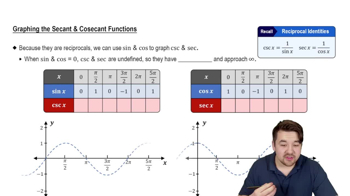
Determine whether each statement is possible or impossible. See Example 4. cot θ = ―6
917
views

 Guida verificata passo dopo passo
 6:22
6:22
 4:35
4:35 4:22
4:22Determine whether each statement is possible or impossible. See Example 4. cot θ = ―6
Convert each angle measure to degrees, minutes, and seconds. If applicable, round to the nearest second. See Example 4(b). 174.255°
Use identities to solve each of the following. Rationalize denominators when applicable. See Examples 5–7. Find csc θ , given that cot θ = ―1/2 and θ is in quadrant IV.
In each figure, there are two similar triangles. Find the unknown measurement. Give approximations to the nearest tenth.
Find the indicated function value. If it is undefined, say so. See Example 4. sin 90°
Solve each problem. See Example 5. Height of a Carving of Lincoln Assume that Lincoln was 6 1/3 ft tall and his head was 3/4 ft long. Knowing that the carved head of Lincoln at Mt. Rushmore is 60 ft tall, find how tall his entire body would be if it were carved into the mountain.