
Domanda del libro di testo
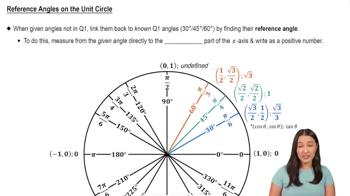
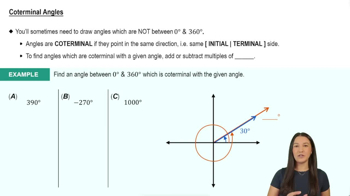
Determine whether each statement is true or false. If false, tell why. csc 22° ≤ csc 68°
636
views

 Guida verificata passo dopo passo
 5:31
5:31
 04:46
04:46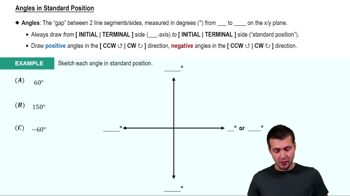 05:50
05:50Determine whether each statement is true or false. If false, tell why. csc 22° ≤ csc 68°
Concept Check Refer to the discussion of accuracy and significant digits in this section to answer the following. WNBA Scorer Women's National Basketball Association player Breanna Stewart of the Seattle Storm was the WNBA's top scorer for the 2018 regular season, with 742 points. Is it appropriate to consider this number between 741.5 and 742.5? Why or why not? (Data from www.wnba.com)
Find exact values or expressions for sin A, cos A, and tan A. See Example 1.
Suppose ABC is a right triangle with sides of lengths a, b, and c and right angle at C. Use the Pythagorean theorem to find the unknown side length. Then find exact values of the six trigonometric functions for angle B. Rationalize denominators when applicable. See Example 1. a = 6, c = 7
Solve each right triangle. When two sides are given, give angles in degrees and minutes. See Examples 1 and 2.
Suppose ABC is a right triangle with sides of lengths a, b, and c and right angle at C. Use the Pythagorean theorem to find the unknown side length. Then find exact values of the six trigonometric functions for angle B. Rationalize denominators when applicable. See Example 1.
a = 5, b = 12