A biochemist measured the amount of DNA in cells growing in the laboratory and found that the quantity of DNA in a cell doubled
a. between prophase and anaphase of mitosis.
b. between the G1 and G2 phases of the cell cycle.
c. during the M phase of the cell cycle.
d. between prophase I and prophase II of meiosis.
검증된 단계별 안내
1
1. Understand that the question is asking about the stages of the cell cycle or mitosis/meiosis where the DNA content of a cell doubles. This is a fundamental concept in cell biology.
2. Recall that the cell cycle consists of several phases: G1 (first gap), S (synthesis), G2 (second gap), and M (mitosis). During the S phase, the DNA in the cell is replicated, resulting in a doubling of the DNA content. This means that the DNA content of a cell doubles between the G1 and G2 phases of the cell cycle.
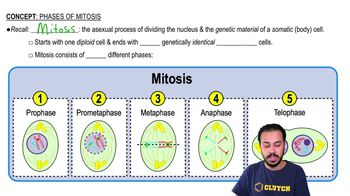
3. Understand that mitosis is a part of the M phase of the cell cycle and consists of several stages: prophase, metaphase, anaphase, and telophase. However, the DNA content does not double between any of these stages. Instead, the DNA content remains the same, but the DNA is divided equally between the two daughter cells.
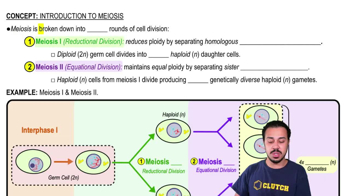
4. Understand that meiosis is a special type of cell division that results in four daughter cells each with half the number of chromosomes of the parent cell. The DNA content does not double between any stages of meiosis.
5. Based on the above information, the correct answer is that the DNA content of a cell doubles between the G1 and G2 phases of the cell cycle.
비슷한 문제에 대한 검증된 영상 답변:
이 영상 해법은 위 문제에 도움이 된다고 튜터들이 추천한 것입니다.
영상 길이:
1m
영상 재생:
0 댓글
주요 개념
질문에 올바르게 답하기 위해 반드시 이해해야 하는 핵심 개념들은 다음과 같습니다.
Mitosis
Mitosis is the process of cell division that results in two genetically identical daughter cells from a single parent cell. It consists of several phases: prophase, metaphase, anaphase, and telophase. During mitosis, DNA is replicated during the S phase of the cell cycle, and the actual separation of chromosomes occurs during anaphase, where the sister chromatids are pulled apart.
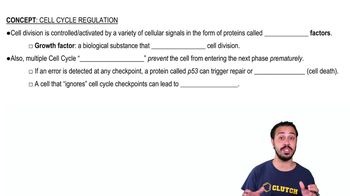
The cell cycle is a series of phases that a cell goes through to grow and divide. It includes the G1 phase (cell growth), S phase (DNA synthesis), G2 phase (preparation for mitosis), and M phase (mitosis and cytokinesis). The G1 to G2 transition is crucial for DNA replication, where the amount of DNA in the cell doubles in preparation for mitosis.
Meiosis is a specialized form of cell division that reduces the chromosome number by half, resulting in four non-identical gametes. It consists of two rounds of division: meiosis I and meiosis II. During prophase I, homologous chromosomes pair and exchange genetic material, but the DNA does not double again between prophase I and prophase II, making it distinct from mitosis.