 뒤로
3.1 The study of Cells
 06:13

이 집합의 용어 (12)
The smallest living unit in the body
Cells
Cells are the building blocks of all plants and animals.
Cells are the smallest functioning units of life.
Cells are produced through the division of preexisting cells.
Each cell maintains homeostasis
Cell theory
The study of the structure and function of cells
Cytology
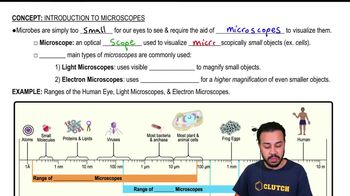
Most common methods used to study cell and tissue structure
Light and Electron mircoscopy
Before the 1950s
Uses a series of glass lenses
Can magnify cellular structures by 1000 times
Typically involves looking at this sections sliced from a larger piece of tissue
Light microscopes
Photographs taken through a light microscope is called...
Light micrograph (LM)
Replaced the light microscope
A technique that replaced the light with a focused beam of electrons.
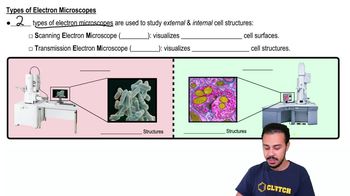
Electron microscopy
Photographs of very thin sections that reveal fine details of cell membranes and structures within the cell.
Transmission electron micrograph (TEMs)
Provides less magnification but reveal the three-dimensional nature of cell structures.
Provides a surface view of a cell, a portion of a cell, or structures outside the cell rather than a detailed sectional view
Scanning electron micrographs (SEMs)
A cell membrane
Plasma membrane
The material between the plasma membrane and the nuclear membrane
Cytoplasm
All the body fluid outside the cells
Extracellular fluid (ECF)