Skip to main content
Anatomy & Physiology
나의 코스
배우기
시험 준비
AI 튜터
학습 가이드
교과서적 해결책
플래시카드
탐험해 보세요
앱을 사용해 보세요
나의 코스
배우기
시험 준비
AI 튜터
학습 가이드
교과서적 해결책
플래시카드
탐험해 보세요
앱을 사용해 보세요
뒤로
abem Anatomy & Physiology: Respiratory and Cardiovascular System Key Concepts
카드를 뒤집기 위해 탭할 수 있습니다.
Primary locations of gas exchange in the respiratory system
카드를 뒤집기 위해 탭할 수 있습니다.
👆
Primary locations of gas exchange in the respiratory system
Gas exchange occurs mainly in the
alveoli
of the lungs where oxygen moves into the blood and carbon dioxide moves out.
진행 상황 추적
컨트롤 버튼이 '내비게이션' 모드로 변경되었습니다.
1/32
추천 영상
VideoThumbView.guidedCourse
4:28
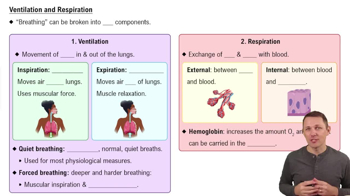
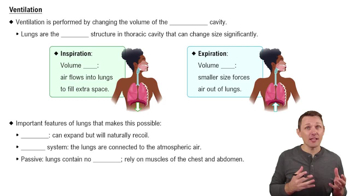
Ventilation
8382
views
195
rank
1
comments
VideoThumbView.guidedCourse
5:55
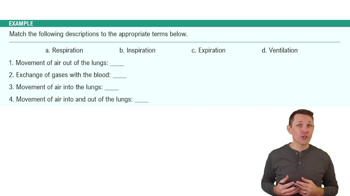
Ventilation and Respiration
12343
views
367
rank
1
comments
VideoThumbView.guidedCourse
1:37
Introduction to Lung Physiology Example 1
8391
views
223
rank
1
comments
이 집합의 용어 (32)
하이드의 정의
Primary locations of gas exchange in the respiratory system
Gas exchange occurs mainly in the
alveoli
of the lungs where oxygen moves into the blood and carbon dioxide moves out.
Function of the conducting zones in the respiratory system
The conducting zones
filter, warm, and humidify
air and conduct it to the respiratory zones for gas exchange.
Function of the uvula and epiglottis
The
uvula
prevents food from entering the nasal cavity; the
epiglottis
prevents food from entering the trachea during swallowing.
Why do objects lodge more often in the right bronchus?
The
right bronchus
is more vertical and wider, so inhaled objects tend to lodge there more than the angled left bronchus.
Difference between Type 1 and Type 2 alveolar cells
Type 1 cells form the
alveolar walls
for gas exchange; Type 2 cells produce
surfactant
to reduce surface tension.
Role of surfactant in the lungs
Surfactant
reduces surface tension in alveoli, preventing collapse and aiding lung expansion.
Boyle's Law in respiration
Boyle's Law states that
pressure and volume are inversely related
; as lung volume increases, pressure decreases, causing air to flow in.
What happens during normal inspiration?
The
ribcage elevates
and the
diaphragm flattens
, increasing thoracic volume and decreasing pressure to draw air in.
What is a pneumothorax?
A
pneumothorax
is air in the pleural cavity causing lung collapse.
What is a hemothorax?
A
hemothorax
is blood accumulation in the pleural cavity.
Effect of bronchoconstriction on airways
Bronchoconstriction
decreases airway diameter
, increasing resistance and making breathing more difficult.
Direction of oxygen movement during gas exchange
Oxygen moves from the
lungs (alveoli) into the blood
, then from blood into tissues.
How many oxygen molecules can bind to one hemoglobin molecule?
One hemoglobin molecule can bind up to
four oxygen molecules
.
Conditions that favor oxygen unloading from hemoglobin
Increased
acidity, temperature, and CO2 pressure
favor oxygen unloading to tissues.
How is most CO2 carried in the blood?
About
70%
of CO2 is carried as
bicarbonate ions
in the plasma.
Primary function of alveolar macrophages
Alveolar macrophages
clean up debris and pathogens
in the alveoli.
Brain area controlling basic rhythm of breathing
The
medulla oblongata
controls the basic rhythm of breathing.
System responsible for controlling breathing
The
respiratory control system
in the brainstem regulates breathing rate and depth.
Difference between pulmonary arteries and veins
Pulmonary arteries carry
deoxygenated blood
to the lungs; pulmonary veins carry
oxygenated blood
to the heart.
Function of the auricles on the heart
Auricles increase the
capacity of the atria
to hold more blood.
Which side of the heart generates higher pressure and why?
The
left side
generates higher pressure to pump blood through the systemic circulation.
Function of heart valves
Heart valves ensure
one-way blood flow
through the heart chambers.
What is the SA node?
The SA node is the heart's
pacemaker
, initiating electrical impulses for heartbeat.
Pathway of electrical conduction in the heart
Impulse starts at the
SA node
, moves to the
AV node
, then to the
AV bundle
and Purkinje fibers.
Definition of cardiac output
Cardiac output is the
volume of blood pumped per minute
by the heart.
Locations of heart valves and chambers they separate
The
atrioventricular valves
separate atria and ventricles; the
semilunar valves
separate ventricles from arteries.
What are tachycardia and bradycardia?
Tachycardia is a
fast heart rate
; bradycardia is a
slow heart rate
.
What do S1 and S2 heart sounds represent?
S1 is the closing of
atrioventricular valves
; S2 is the closing of
semilunar valves
.
Function of pericardial fluid
Pericardial fluid
reduces friction
between heart and pericardium during heartbeats.
Primary function of the cardiovascular system
To
transport blood
, delivering oxygen and nutrients and removing wastes.
How do heart valves open and close?
Valves open and close based on
pressure differences
to maintain unidirectional blood flow.
Does blood continue entering atria before atrial contraction?
True: Blood continues to enter the atria from the vena cava and pulmonary veins before atrial contraction.
 뒤로뒤로
 4:28