 뒤로
Anatomy & Physiology: Anatomical Terms, Body Cavities, and Planes
 02:40

이 집합의 용어 (20)
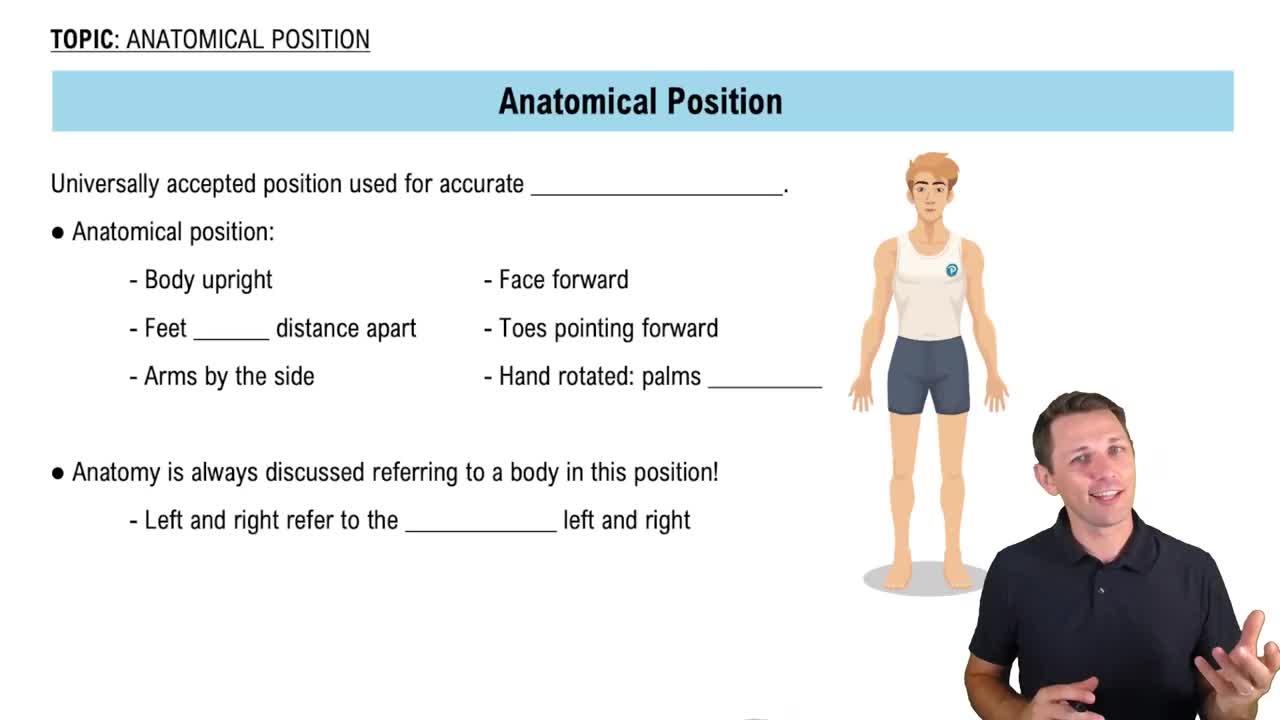
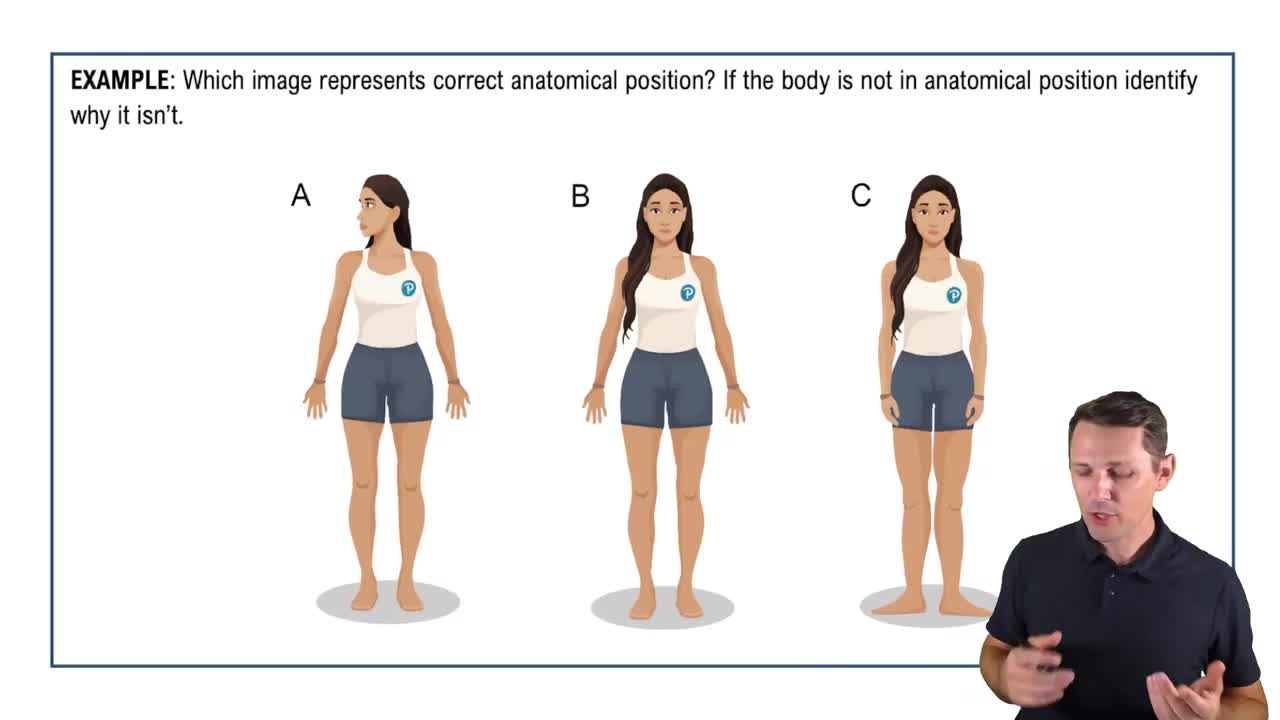
Standing up, hands at the sides, palms facing forward, feet together.
A structure located above another. Example: The nose is superior to the mouth.
A structure located below another. Example: The mouth is inferior to the nose.
A structure toward the front of the body. Example: The xiphoid process is anterior to the lungs.
A structure toward the back of the body. Example: The spine is posterior to the lungs.
Farther from the point of attachment to the body. Example: The hands are distal to the elbow.
Closer to the point of attachment to the body. Example: The elbow is proximal to the phalanges.
Away from the midline of the body. Example: The shoulder is lateral to the clavicle.
Toward the midline of the body. Example: The lips are medial to the ear.
Superficial: Toward the surface of the body. Deep: Away from the body surface. Example: Skin is superficial to the heart; lungs are deep to the ribs.
Toward the back. Example: The spine is dorsal to the breastbone.
Toward the front. Example: The navel is ventral to the spine.
Thoracic cavity (lungs, heart) and abdominopelvic cavity (digestive, urinary, reproductive organs).
The diaphragm, a muscular sheet.
A delicate serous membrane lining the pericardial cavity; secretes fluid to reduce friction and allows heart movement.
Organs located behind the peritoneal lining, e.g., kidneys and pancreas.
Two cavities each enclosing a lung, lined by the pleura serous membrane.
Connective tissue mass between pleural cavities containing the pericardial cavity and heart.
Frontal (coronal), sagittal (median), and transverse (horizontal) planes.
They line cavities and cover organs, secreting fluid to reduce friction during organ movement.