Skip to main content
Anatomy & Physiology
나의 코스
배우기
시험 준비
AI 튜터
학습 가이드
교과서적 해결책
플래시카드
탐험해 보세요
앱을 사용해 보세요
나의 코스
배우기
시험 준비
AI 튜터
학습 가이드
교과서적 해결책
플래시카드
탐험해 보세요
앱을 사용해 보세요
뒤로
Anatomy & Physiology: Auditory and Vestibular System
카드를 뒤집기 위해 탭할 수 있습니다.
External ear components
카드를 뒤집기 위해 탭할 수 있습니다.
👆
External ear components
Includes the
pinna/auricle
and the
external acoustic meatus
, which collect and direct sound waves toward the tympanic membrane.
진행 상황 추적
컨트롤 버튼이 '내비게이션' 모드로 변경되었습니다.
1/22
추천 영상
VideoThumbView.guidedCourse
5:05
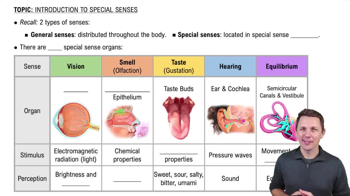
Special Senses
10299
views
266
rank
2
comments
VideoThumbView.guidedCourse
3:08
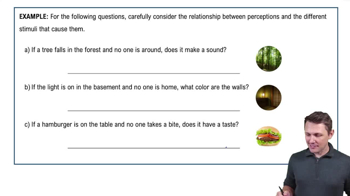
Introduction to Special Senses Example 1
6745
views
151
rank
이 집합의 용어 (22)
하이드의 정의
External ear components
Includes the
pinna/auricle
and the
external acoustic meatus
, which collect and direct sound waves toward the tympanic membrane.
Middle ear structures
Contains the
tympanic membrane
and the
ossicles
(malleus, incus, stapes) that transmit sound vibrations to the inner ear.
Inner ear anatomy
Comprises the
cochlea
,
vestibule
, and
semicircular ducts
, responsible for hearing and balance.
Cochlea function
Transforms sound vibrations into nerve impulses via the
spiral organ (of Corti)
containing hair cells.
Hair cells of hearing
Sensory receptors in the cochlea that convert mechanical sound vibrations into electrical signals.
Tympanic membrane
Also called the eardrum; vibrates in response to sound waves and transmits them to the ossicles.
Ossicles
Three small bones (malleus, incus, stapes) that amplify and transmit sound from the tympanic membrane to the inner ear.
Pharyngotympanic (Eustachian) tube
Connects the middle ear to the throat, equalizing pressure on both sides of the tympanic membrane.
Scala media (cochlear duct)
A fluid-filled chamber in the cochlea containing the spiral organ and endolymph.
Scala vestibuli and scala tympani
Two perilymph-filled chambers in the cochlea that transmit sound vibrations around the cochlear duct.
Basilar membrane
Supports the spiral organ and vibrates in response to sound, enabling hair cells to detect different frequencies.
Tympanic membrane vs. basilar membrane
The tympanic membrane vibrates from sound waves; the basilar membrane vibrates inside the cochlea to stimulate hair cells.
Decibels (dB)
Unit measuring sound intensity or loudness.
Dynamic equilibrium
Sense of balance during motion, detected by the
crista ampullaris
in the semicircular ducts.
Static equilibrium
Sense of head position relative to gravity, detected by the
macula
in the utricle and saccule.
Crista ampullaris
Sensory receptor in the semicircular ducts that detects rotational movements of the head.
Macula
Sensory epithelium in the utricle and saccule that detects linear acceleration and head position.
Otoliths
Calcium carbonate crystals in the utricle and saccule that enhance detection of gravity and linear acceleration.
Utricle and saccule
Parts of the vestibule containing maculae that detect static equilibrium.
Semicircular ducts
Three fluid-filled tubes in the inner ear that detect rotational movements for dynamic equilibrium.
Internal ear (labyrinth)
Complex system of fluid-filled chambers including cochlea, vestibule, and semicircular canals.
Motion sickness cause
Conflicting signals between the inner ear's balance system and visual input.
 뒤로뒤로
 5:05