 뒤로
Anatomy & Physiology: Basic Concepts and Body Organization
카드를 뒤집기 위해 탭할 수 있습니다.
컨트롤 버튼이 '내비게이션' 모드로 변경되었습니다.
1/10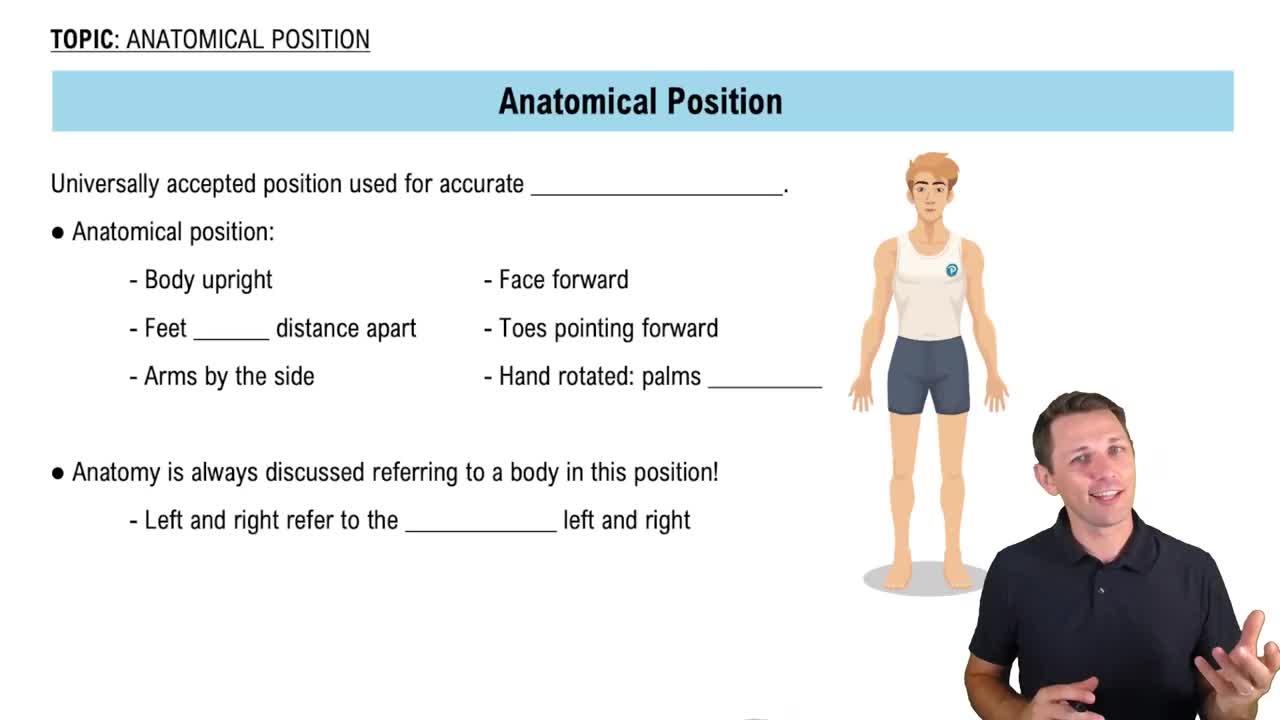
 02:40

이 집합의 용어 (10)
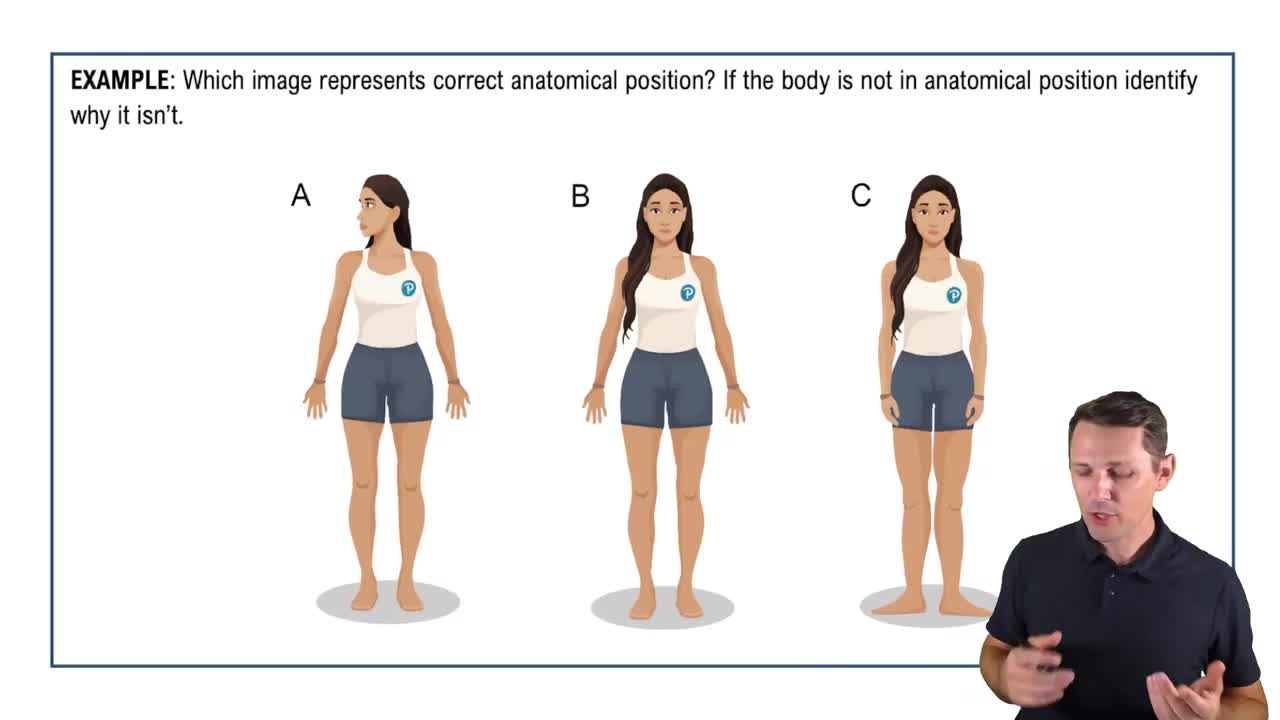
The anatomical position is standing erect with palms and arms facing forward, face forward, and feet slightly apart facing forward. It is the standardized way to describe body parts.
It provides a universal reference to describe and identify body parts consistently.
The frontal plane (also called the coronal plane) separates anterior and posterior parts.
Proximal. The knee is closer to the trunk than the foot.
Possible burst appendix, requiring emergency attention.
The left hypochondriac region.
The spinal cavity and the cranial cavity.
The transverse plane, which divides the body into superior and inferior parts.
Damage to the pleura, the serous membrane surrounding the lungs.
The pericardium.